Bolero or stole for a wedding: differences and how to choose
To choose between a bolero or stole for a wedding, start with how long you want to keep your shoulders covered and how you will move during the event. A sleeved bolero provides more stable coverage, while a stole lets you add or remove a draped layer easily. Your dress matters too: a bolero creates a defined edge across the upper body, while a stole adds softer folds and lines. Neither option is always more elegant. Here are the differences to look for, three practical situations and a simple fitting exercise to help you decide which accessory works best with your dress.
What is the difference between a bolero, a stole and a cover-up?
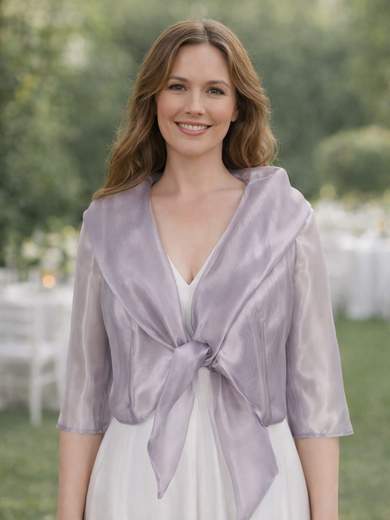
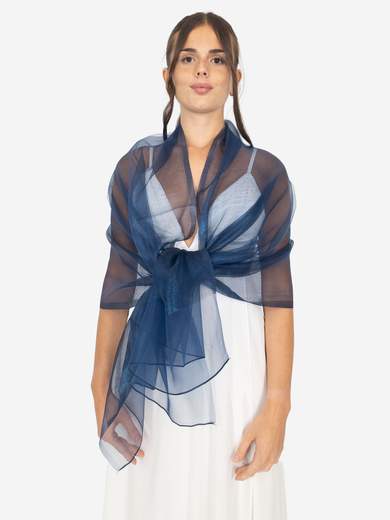
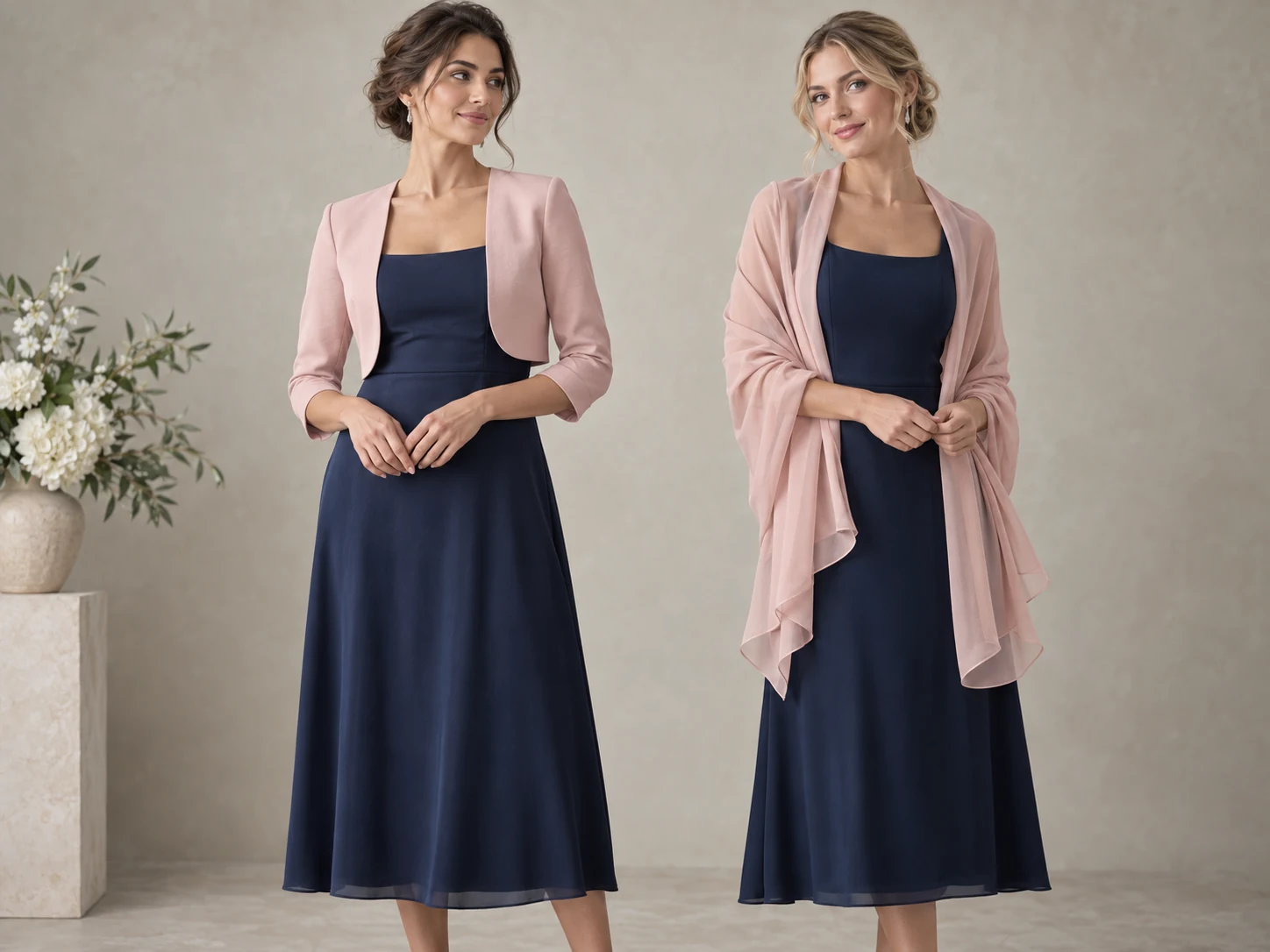
A bolero is a cropped jacket, usually with sleeves, worn as a garment. A stole is a wide strip of fabric placed and draped over the shoulders. The key difference is their construction: a bolero follows the body through its shoulders and armholes, while a stole takes its shape from the way you arrange it.
“Cover-up” can describe a short garment or, more broadly, an accessory that covers the shoulders. Product names alone are therefore not enough: check for sleeves, look at the opening and see where the fabric ends. Two items described as cover-ups can behave very differently when you wear them.
| Feature | Sleeved bolero | Stole |
|---|---|---|
| Stability | Stays on the shoulders when it fits correctly. | May need its drape readjusting. |
| Coverage | Depends on sleeves, opening and fabric. | Depends on width, fabric and position. |
| Effect on the dress | Adds a short, defined line. | Adds folds and loose ends. |
| Taking it off | Requires slipping out of the sleeves. | Can be put on and removed quickly. |
| Packing it away | May retain a more structured shape. | A thin version can be folded easily. |
This comparison concerns shape, not warmth: a substantial stole may provide more protection than a sheer bolero. Fibre content, thickness and lining should be assessed for each item, rather than assuming that every style has the same qualities.
When a bolero is the better option
A bolero is a useful choice when you want to keep your shoulders covered without holding fabric in place. When greeting people, walking around or standing at a drinks reception, sleeves can make it easier to manage your bag and glass. That convenience still depends on fit: tight armholes can restrict movement and pull the whole garment upwards.
Before choosing one, try reaching forwards and sitting down. Check that the edge does not pull across your upper body and that fabric does not bunch behind your neck. If you intend to wear it open, it should hang well that way; there is no need to force a fastening that the design does not include.
Over a simple dress, a bolero introduces a recognisable shape, almost like a frame around the bodice. It can work well if you prefer a composed outfit and want to leave the lower part of the dress more visible. Check where it finishes, though: an edge that meets an embellishment or a prominent belt can create an awkward break.
If this approach suits your needs, compare elegant cover-ups for occasion dresses, paying particular attention to the opening, sleeves and fit. A photograph of the garment on its own is a starting point; judge the result alongside the dress you will actually wear.
When a stole is more practical
A stole is worth considering when you only need coverage at certain moments or prefer an accessory with a soft drape. You can take it off when you enter the reception room and put it back around your shoulders when you step outside, without slipping into sleeves again. A lightweight version often takes up little space, provided you have somewhere to keep it without unnecessary compression.
That freedom of arrangement needs some attention. A very smooth surface may slide against your dress; loose ends can move as you walk or take up space when you sit. If the thought of adjusting it frequently bothers you, do not choose a stole simply because you like the effect in a photograph.
Width matters too: a narrow wrap may finish the outfit without covering every area you want it to. Try it with your arms relaxed, then bent, and check how its position changes. Sheerness is another feature to assess while wearing it, especially if you want visual coverage as well as a decorative detail.
You can explore stoles for weddings and formal occasions if you prefer this option. Focus on dimensions and drape before decorative details: a stole that looks appealing when folded may create more volume than you want once it is opened out.
How to decide with your chosen dress
Put the dress on before comparing the two accessories. Wearing the outfit reveals the relationship between neckline, waist and coverage more accurately than placing two hangers together. The useful question is which details you want to remain visible when you add the upper layer.
If your dress has a simple shape, try both options: a bolero introduces a defined outline, while a stole makes the overall effect more flowing. With an embroidered bodice, look instead at how much of the detail is covered. An open bolero may leave the centre of the bodice visible, while a stole draped across the front may cross over it.
A one-shoulder dress or an unusual neckline does not automatically call for one option. Check whether the bolero edge meets the neckline neatly and whether the stole, in the position you would actually wear it, preserves or conceals the asymmetry. Try removing the accessory too: you should like the outfit both ways.
To compare shapes clearly, start with accessories in similar colours and with restrained decoration. If you change colour, volume and embellishment all at once, it will be harder to tell whether you prefer the bolero itself or simply its colour. Choose the finish that completes your outfit afterwards.
Bolero or stole: three practical situations
A church wedding followed by a reception elsewhere
If you want stable coverage during the service, a bolero may feel convenient. A sufficiently wide stole is an alternative if it stays in the position you want. With either option, check the venue's guidance and the fabric's sheerness: having fabric over your shoulders does not always provide the level of coverage requested.
A summer celebration with an outdoor drinks reception
If you expect to move around with your hands full, try the bolero first. If you only want an extra layer while resting or in air-conditioned spaces, a stole may be easier to manage. Consider looseness and lining for comfort too: neither sleeves nor draping alone tells you how warm you will feel.
An evening reception with an embellished dress
Compare a simple bolero with a stole that adds little bulk, keeping the dress as the main feature. Look at the result while seated: folds and edges can shift. If the evening includes dancing, decide whether you want to keep the accessory on or put it away; that practical choice may matter more than your first impression in the mirror.
A practical fitting before you choose
Compare both options under the same conditions: the same dress, shoes and lighting. Spend a few minutes moving instead of stopping at a front-facing pose. A convincing choice should also work when you sit, turn and pick up your bag.
- Check front and back: look at coverage, edges and any areas where fabric gathers.
- Rehearse the event's movements: greet someone, bend your arms and sit without deliberately holding the accessory in position.
- Try taking it off: check how easy the movement feels and where you will keep it during the reception.
- Look at the complete outfit again: choose the effect you like in real positions, not just in the most flattering photograph.
If you prefer sleeved coverage, use these criteria to select cover-up styles to compare with your dress. If an accessory you can drape on and remove feels better, consider a stole. The most useful choice completes your dress and lets you enjoy the event naturally.
Frequently asked questions about boleros and stoles
Does a bolero or stole need to match the dress fabric?
No. It can have a different surface, provided you like the overall effect. Place it against the dress and assess volume and embellishment in particular: repeating the exact fabric is not essential for a harmonious outfit.
Can I bring both a bolero and a stole?
You can use them at different moments if each serves a practical purpose. Wearing them together adds bulk and may make your upper body feel less free to move. Try the combination beforehand rather than assuming two accessories will be more useful than one.
Will a one-size stole suit everyone?
The label does not guarantee the same result on every person. Width, length and the coverage you want all matter. Check the measurements and how much fabric remains loose once it is over your shoulders, especially if you want to cover your arms too.
How should I pack the accessory without spoiling its shape?
Follow the care instructions and allow room for any structured sections. Avoid pressing embellishments or embroidery between heavy objects. Unpack the accessory on arrival and check the label before using an iron or steam.
Can a brooch leave marks on a stole?
Yes, particularly on delicate or open-weave fabrics. Before adding one, consider its weight, pin and compatibility with the material. If you are concerned about holes or pulled threads, choose an arrangement that does not require piercing the accessory.