
Chiffon, satin or crepe: how fabric changes an occasion dress
When choosing chiffon, satin or crepe for an occasion dress, start with the effect you want: chiffon suggests lightness and movement, satin brings out reflections, while many crepes offer a quieter, subtly textured surface. The finished result also depends on weight, lining and cut. Two dresses described as the same fabric can drape quite differently. Understanding these distinctions helps you read product descriptions and compare styles, rather than relying on a material's name or your first impression of a photograph. The aim is to find the combination that suits your preferences.
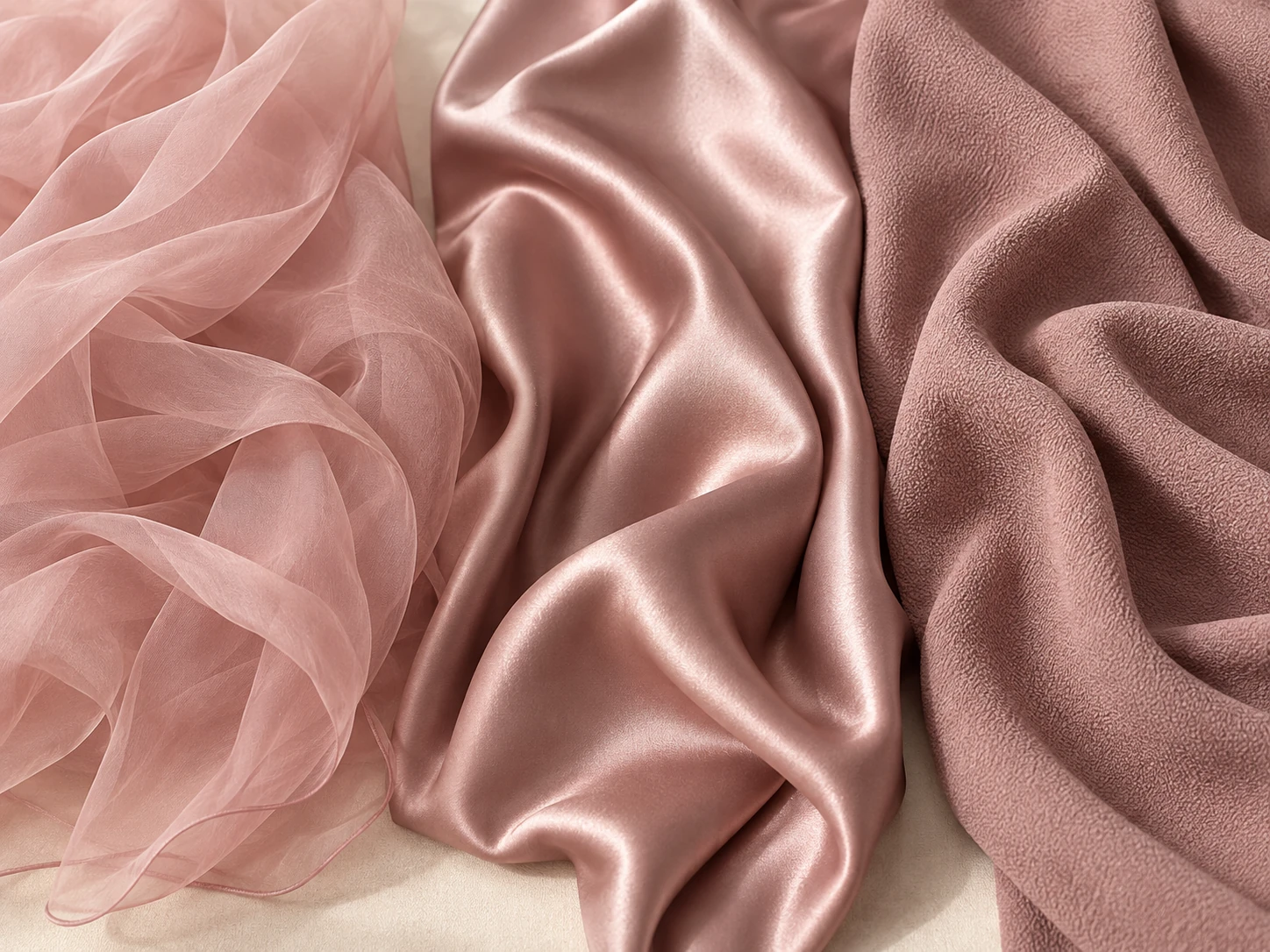
Chiffon, satin and crepe: there is more to a name
The first useful distinction is between fibre and fabric. Silk, polyester and viscose describe fibre content; chiffon, satin and crepe refer to fabric types or aspects of their construction and surface. Satin is not necessarily silk, and the word chiffon alone does not tell you which fibre has been used.
These terms do not always describe separate groups, either. Crepe satin, for example, combines characteristics associated with both families. You do not need to recognise every textile technique to choose a dress. What matters is avoiding assumptions: crepe is not always matte and opaque, satin is not always stiff, and chiffon does not automatically guarantee a cool feel.
As you compare occasion dresses, read the composition and look at where each fabric is used. A description may refer to the skirt, while the bodice is made from something different. Any stated stretch should also be considered in relation to the whole garment: a lining without stretch may restrict it.
Chiffon: light movement and layers
Chiffon is generally thin and sheer, with an airy appearance that works well in layered panels, draping and skirts with movement. Its visual lightness is worth considering if you want the dress to respond to each step, without a strongly reflective surface.
When assessing a style, pay particular attention to what sits beneath the outer layer. A chiffon skirt may reveal a shorter lining underneath, or it may be lined throughout its length. These are different design choices, and it helps to identify them before buying. A photograph taken from the front does not always make the distinction clear; side views and close-ups of the hem can be more useful.
Imagine two skirts in the same colour: one has a single light layer over a simple lining, while the other has several gathered panels. Both might be described as chiffon, but the second will have more visual volume. If you prefer an understated shape, look at gathers and overlapping layers as well as the fabric name.
Think about accessories that will come into contact with the dress, too. A bag with rough details or jewellery that catches may interfere with a delicate surface. You do not have to avoid accessories altogether; simply check that they do not rub against the thinnest panels as you wear the dress.
Satin: consider sheen and drape together
Satin typically has a smooth, lustrous face. It is worth exploring when you want the fabric itself to contribute to the dress's appeal, without relying on embroidery or embellishment. Even a simple silhouette can have character through the areas of light and shadow formed by its folds.
The difference between chiffon and satin is not just about shine, however. Satin includes light, flowing versions as well as fabrics with more body. The name alone cannot tell you whether a skirt will hold a full shape or fall close to the body: look at the design and how the fabric supports it.
A reflective surface can make folds and areas of tension noticeable. A soft fold that belongs to the draping is different from a taut line pulling away from a seam. When comparing photographs, look for several angles. If you can try the dress on, notice how it settles without repeatedly pulling it down into place.
There is no need to dismiss satin simply because you are worried it will look too striking. Consider how much shine you enjoy, how simple the cut is and whether you like the overall effect. A pared-back style and a heavily gathered dress can create different impressions even when they share the same material.
Crepe: a subtle surface with many variations
Crepe is a broad term associated with a crinkled or finely pebbled texture. Many versions used for elegant dresses have a less reflective appearance than glossy satin. They may appeal if you want to emphasise the dress's shape, neckline or draping without making shine the main feature.
Crepes do not all have the same weight, opacity or feel. A light crepe may need a lining, while a heavier version can create a more defined silhouette. Stretch also varies between fabrics and should not be assumed from the name alone.
To narrow down your choice, look for descriptions that explain whether the garment is fluid, structured or stretchy, then check those details against the photographs. A skirt falling into small, soft folds suggests different behaviour from a panel that keeps a defined shape. Photography is a useful clue, rather than a precise measure of fabric weight.
Comparing glossy satin with matte crepe is therefore about choosing a visual effect, rather than ranking one as more elegant than the other. If you prefer a quieter surface, crepe can be a starting point; if you enjoy stronger reflections, explore satin. In either case, the individual dress matters more than its general fabric label.
Lining and cut can change the result
The outer fabric is only one part of a dress. Lining contributes to coverage and to how the garment moves against the body, while seams, gathers and internal construction determine its shape. An exceptionally light outer layer does not automatically make the whole garment light if several layers sit beneath it.
Before deciding, separate three considerations:
- Coverage: establish which areas are lined and where any sheerness is intentional.
- Volume: look at how much comes from the fabric itself and how much comes from pleats, ruffles or overlapping layers.
- The overall line: check whether the skirt and bodice create the continuity or contrast you want.
For example, if you want movement without much volume, comparing skirt construction may be more useful than automatically choosing chiffon. If you prefer a defined shape, ask whether it comes from the material or from an internal structure. These questions make comparisons more precise and help you request specific information when a product description does not provide every detail.
How to choose between the three fabrics
Before opening lots of product pages, decide on two priorities: how much movement you want and how much sheen you like. Then add your preferred level of coverage. You will have practical criteria for narrowing down the selection, instead of searching for one universally better material.
- For an airy effect, start with chiffon styles and check the lining and number of layers.
- For a more reflective finish, compare satin styles and distinguish flowing drape from a more structured construction.
- For a subtler surface, consider crepes and check their weight, coverage and any stated stretch.
The entire dress does not need to be made from the same fabric. A design can combine different surfaces: consider where you want the focus to fall and whether you like the transition between bodice and skirt. Once you know the effect you are looking for, explore the occasion dress collection and compare the characteristics of each individual garment.
Frequently asked questions about chiffon, satin and crepe
Do satin and the Italian term raso mean the same thing?
In fashion descriptions, raso is commonly used as the Italian equivalent of satin. Neither name identifies fibre content on its own. To find out whether a fabric contains silk, polyester or other fibres, read the label or product description.
Which of these fabrics creases the least?
There is no answer that applies to every version. Fibre, construction and finishing all affect a material's behaviour. If crease resistance matters to you, ask about the specific garment instead of judging it by the fabric name alone.
Does a matte fabric always look less elegant?
No. Elegance does not require a shiny surface: proportions, cut and attention to detail can also make a matte dress appealing. Sheen is a stylistic choice based on your preferences, rather than a requirement the dress needs to meet.
Can I judge quality by price or shine?
Neither is enough on its own. Consider the accuracy of the seams, finishing, lining and how well the fabric works with the design. A highly reflective surface does not automatically indicate superior quality, and a vague description is not enough for a reliable comparison.
Can I use the same cleaning method for every satin or crepe dress?
No. Follow the care label for the complete garment, which must also account for lining, embellishment and construction. The fabric name alone cannot determine a suitable treatment for the dress.