
Cocktail or Black Tie? How to Read a Wedding Guest Dress Code
When an invitation specifies cocktail or black tie wedding attire, start by understanding the level of formality. Cocktail calls for a polished occasion look, often built around a knee-length or midi dress; black tie points towards more formal eveningwear, with a long evening gown usually the safer starting point. The difference is not simply the hemline: construction, fabric and accessories all contribute. Reading the wording carefully, looking for the couple's additional guidance and considering the setting will help you choose confidently, before committing to a dress that might not suit the celebration.
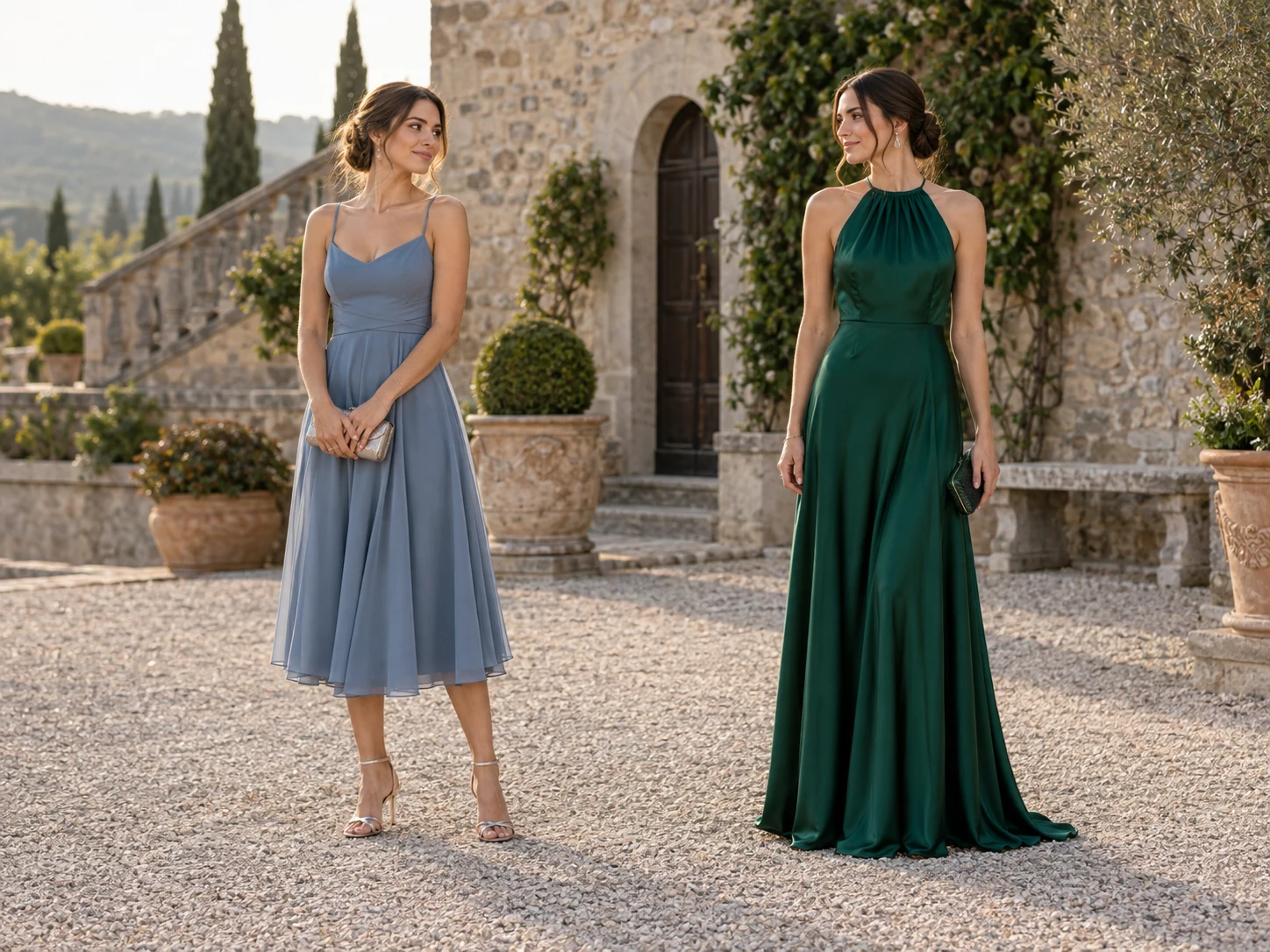
Cocktail vs black tie: what changes for a wedding guest?
Cocktail attire is elegant but less formal than black tie. Black tie belongs to formal eveningwear. A useful starting point is the distinction between a polished reception dress and a look with a more pronounced evening character. This is not a question of spending more or adding embellishment; it is about making the whole outfit work at the right level.
A well-constructed midi dress with a defined silhouette and considered accessories can be a good starting point for cocktail attire. For a black tie invitation, a long evening gown generally provides a safer reference. Some interpretations also allow particularly formal cocktail dresses. If that is your preference, check the event's guidance rather than assuming that any midi dress will qualify.
- Cocktail: occasion dressing without necessarily choosing a full evening gown.
- Black tie: a higher level of formality reflected throughout the outfit.
- For either code: the couple's additional instructions help explain what the wording means for their celebration.
Before comparing dresses to wear as a wedding guest, establish the level expected. This is more useful than starting with a favourite length or colour alone, and it helps narrow your options while leaving room for personal style.
What does cocktail attire mean at a wedding?
Cocktail attire leaves room for personality while still looking considered and appropriate for a special occasion. A knee-length or midi dress is often straightforward to style, but length alone does not establish whether it works. A simple design can feel elegant through its fit, drape and finishing details.
For example, you might start with a midi dress featuring a gently flared skirt and a clean bodice, then add a small bag and shoes with a refined finish. Alternatively, choose a more fluid silhouette and let a pair of earrings frame your face. These are illustrative combinations, not a compulsory accessories list: the aim is a balanced outfit that feels intentional.
Avoid reading “cocktail” as an invitation to an ordinary informal drinks gathering. An everyday dress will not necessarily become suitable simply because you add a statement piece of jewellery. Equally, an expansive gown with highly theatrical details may go beyond the tone intended. Look at the whole outfit and ask whether its elements express a similar degree of elegance.
Examine the fabric closely, too: check sheerness, lining, seams and how it behaves when you move. A shiny surface does not automatically make a dress formal, just as a matt fabric does not make it casual. For a practical decision, consider how the dress falls on your body and how it works with the accessories you actually intend to wear.
Black tie: choosing a formal evening look
If the invitation says black tie, a long dress with a clear eveningwear character is the most cautious starting point. It need not be covered in embroidery or sequins. An understated design can express formality through proportion, construction and finish. A beach maxi dress, by contrast, does not become an evening gown simply because it reaches your ankles.
Picture a fluid long dress with a clearly defined neckline and accessories that are understated but carefully chosen. The idea is not to add a decorative feature to every part of the outfit, but to create continuity between dress, shoes and bag. If the dress already has distinctive detailing, the other elements can be quieter.
Check the length while wearing the shoes planned for the event. Walk, sit down and make sure the hem does not interfere with your stride. A formal dress should allow you to take part in the reception without constantly adjusting it. Straps and necklines should also stay in place as you move, rather than needing repeated attention.
If you would prefer a midi, do not rely solely on its being described as an elegant dress. Interpretations of black tie vary, and some events explicitly request long gowns. Guidance from the couple or the person coordinating the celebration is more useful than a general rule found online, particularly when the invitation suggests a very formal occasion.
Black tie optional, formal and other variations
Black tie optional does not mean casual. It signals an elegant setting where black tie is welcome but some flexibility is allowed. A long evening gown remains appropriate; a particularly polished cocktail dress may provide an alternative, depending on any additional instructions.
Organisers may use the word “formal” with slightly different meanings. It often points towards elevated eveningwear, but it is unwise to translate it automatically into either cocktail or black tie without reading the rest of the invitation. If the couple provides examples, reference photographs or a dress code section on their wedding website, consider those details together.
Phrases such as “festive cocktail” or “creative black tie” add expressive freedom to the underlying code; they do not remove it. You can interpret the creative element through a finish, an accessory or a personal combination while keeping the required formality. If a colour palette is also specified, treat it as a separate instruction: colour and formality answer different questions.
Where two phrases seem to conflict, do not simply choose the easier interpretation without checking. “Cocktail, long dresses preferred”, for example, expresses a particular preference worth understanding. Asking whether a long dress is required or merely welcome can also help you decide whether something you already own will work.
What to do when the invitation has no dress code
The absence of a dress code does not automatically make a wedding informal. First gather the information available: the type of reception, venue, timing and any guidance from the couple. These details can help you make a reasonable choice, but no single factor creates a universal rule.
A grand villa does not necessarily mean black tie, just as an outdoor celebration does not always call for casual clothing. Timing also needs to be considered alongside the programme. Knowing that the reception starts in the evening does not, by itself, tell you whether guests are expected to wear evening gowns or something less formal.
If the uncertainty affects a purchase, ask a specific question: “Would you prefer a long evening dress, or would an elegant midi be suitable?”. This is more likely to produce a useful answer than simply asking whether everyone should dress up. If a guest contact is named, you can ask that person rather than directing every question to the couple.
Once the formality is clear, shortlist a few dresses and try them with the accessories you plan to wear. Consider what you already own before adding anything new. If you need an alternative, explore the selection of wedding guest dresses and compare silhouettes and details against the invitation. Choosing becomes easier when you understand exactly what the dress needs to do.
Wedding guest dress code questions
Does black tie mean I have to wear a black dress?
No. The term describes a level of formality, not a requirement to wear black. Look for any colour request in the couple's specific instructions and consider it separately from the dress code.
Can I wear a long dress to a cocktail wedding?
It can work if the silhouette, fabric and accessories keep the overall effect appropriately restrained. Check that the outfit does not feel more formal than the event calls for: an understated long dress and a dramatic evening gown make different statements.
Are high heels compulsory for a black tie wedding?
Heel height does not determine formality. Refined shoes that work with the dress can be suitable with a low heel, too. Above all, check the hem with that particular pair and make sure you can walk comfortably.
If the invitation specifies a colour, does the dress code still apply?
Yes: the two instructions work together. The palette identifies the colour, while cocktail or black tie describes the formality. First find a design that suits the event, then check that its shade meets the request.
Do I need a new dress if I already own an elegant one?
Not necessarily. Try it as a complete outfit and compare it with the requested code. Accessories can change its effect, but they cannot bridge every difference in formality. Assess the dress's construction and character before deciding.