
How to wear a faux fur jacket with a long dress: length and proportions
To style a faux fur jacket with a long dress, start with where the jacket ends: its hem should work with the shape of the dress, allowing the transition from bodice to skirt to remain clear. A jacket ending near the waist is a useful starting point with a full skirt; a slightly longer cut may work with a flowing dress. The choice depends on how the two garments sit together. Looking at the outfit from the front and side, with the shoes you plan to wear, tells you more than a rule based on your height alone.
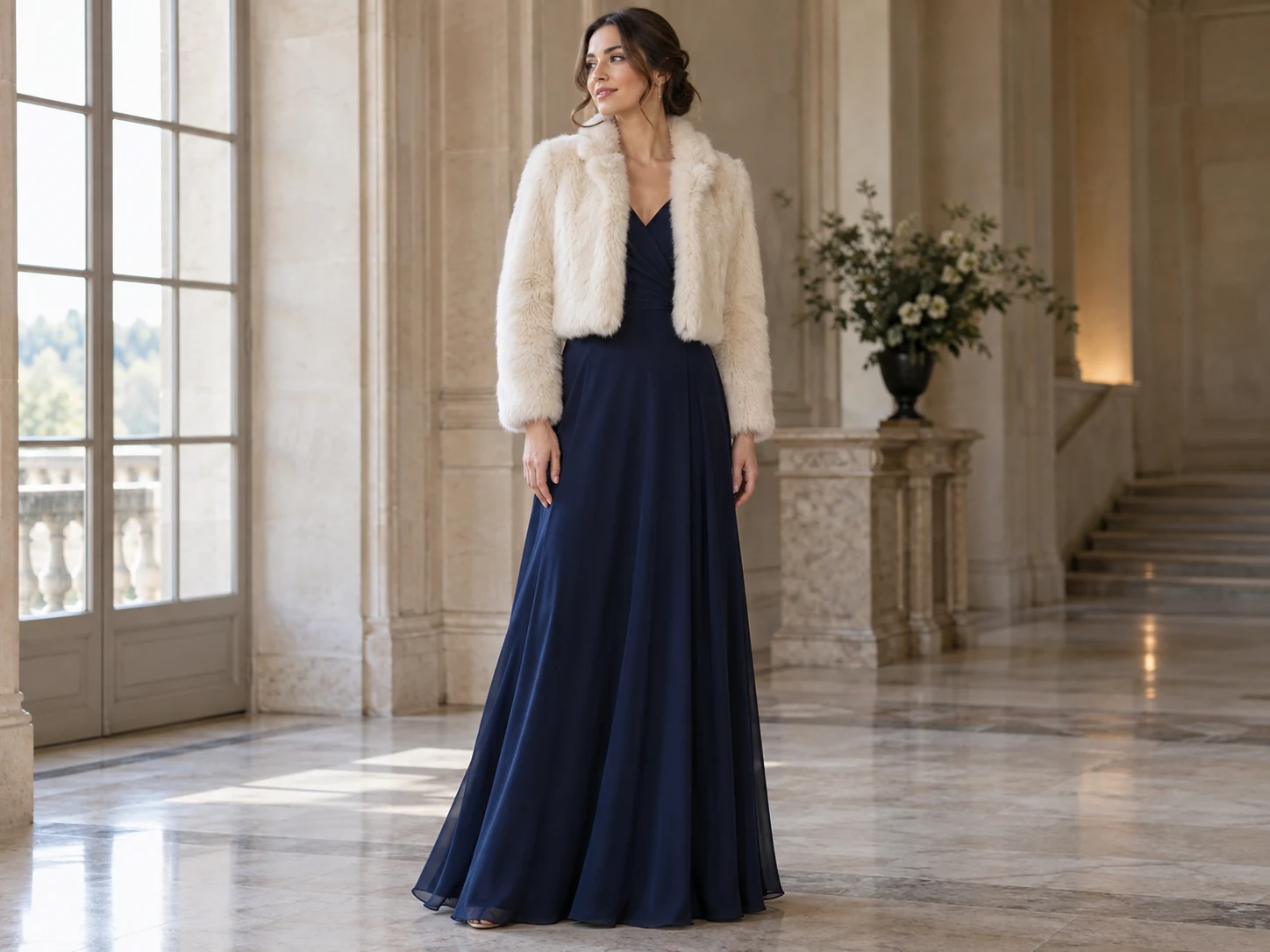
Where should the jacket end over a long dress?
The most useful reference is where the dress changes shape: the waist seam, the start of a flared skirt or the transition from a fitted bodice to softer fabric. Look at the dress without the jacket first and identify that point. Then put the jacket on and check whether its lower edge follows that transition or covers it with an abrupt break.
If the skirt opens out from the waist, try a jacket ending close to that area. Leaving the top of the skirt free can help preserve its movement. If the dress falls almost straight, you have more flexibility: consider a jacket that reaches the upper hip, provided its edge does not catch the fabric beneath.
The two lines do not need to meet exactly. A little overlap can look natural; what matters is whether folds or bunching appear where the dress previously fell smoothly. When browsing faux fur jackets to wear with your dress, look at the length when worn and the shape of the hem, as well as the jacket on its own.
Check the side view too. A jacket that looks neat from the front may stand away from the back or rest on the fullness of the skirt. If the hem seems to float outwards, try a different cut before deciding that the length itself is the problem.
Flowing, mermaid or full skirt: adapting the combination
The skirt's shape helps you decide how much of the dress to leave visible. There is no single required pairing: use these three examples to compare the effect of the pieces you are trying on.
With a flowing long dress
Over a dress that follows the body without flaring very much, a short faux fur jacket creates a clear break between the upper half and the long line of the skirt. You can also try a slightly lower hem: check that it does not interrupt draping at the hip and that the dress continues to move freely as you walk.
For example, with a straight dress that has no waist seam, compare the jacket open and fastened. Open, it leaves a continuous strip of the dress visible; closed, it creates a more compact shape across the torso. Neither is automatically better: choose the version that gives you the overall outline you prefer.
With a mermaid dress
A faux fur jacket over a mermaid dress can leave the fitted hip line and flared lower skirt on show. Start by trying a jacket that ends near the waist: this lets you judge the balance between the bodice and the lower half of the dress.
If you prefer more coverage at the hip, look closely at where the jacket's edge lands. The effect can change when it meets a draped detail or a pronounced seam. Do not judge the front alone: check a mermaid silhouette from the side and while taking a few steps.
With a full or flared skirt
A relatively neat upper layer can give the skirt room without adding another substantial area of volume. If the jacket ends exactly where pleats or gathers begin, check that they do not push it outwards. Sometimes a different hem shape is enough to make the transition smoother.
With a very full dress, start by trying a simply shaped jacket. You can then decide whether you also want volume at the shoulders. That can be a deliberate style choice, but it is worth checking in a full-length mirror: two striking garments may look more dramatic together than you expected.
Balancing the fur, shoulders and sleeves
Length alone does not determine proportion. Two jackets ending at the same point can look very different if one has a compact pile and the other a fluffier surface. The collar and sleeves also contribute to the apparent width of the upper half.
If you want the dress's shape to remain the focus, begin with a less voluminous jacket and see how much of the bodice is still visible. With a simple skirt, you can experiment with a more pronounced upper layer while keeping the dress's vertical line clear. This is not a rule about body shape: it is a way of choosing where to draw the eye.
Look at your arms when they rest naturally by your sides. Wide sleeves can visually merge with the body of the jacket, making it appear broader than when you place a hand on your waist. A relaxed stance is therefore useful for judging how the outfit will look during the occasion.
Finally, consider the neckline. A substantial collar may conceal a neckline you would like to show; a more open shape may leave it visible. Focus on the outline you can see, without feeling you need to add other elements to compensate for a combination you do not like.
Open or fastened: try both proportions
Fastening the jacket changes the outfit's shape. Worn open, it can reveal a continuous line of dress from the bodice to the hem. When closed, the jacket's lower edge becomes more noticeable and creates a stronger division between the top and bottom.
Try both positions if the design allows. Check that the open fronts fall without turning back onto the skirt and that fastening the jacket does not pull the dress upwards. If you only like the result while holding the jacket in place, repeat the check with your hands relaxed and let it settle naturally.
You can drape it over your shoulders to explore another effect, but this changes how the sleeves fall and how securely the garment stays in position. To choose the proportions you will actually wear, test your intended way of wearing it, including a few normal movements and a brief sit-down.
Check the complete outfit in the mirror
The shoes you plan to wear help you assess the dress's actual length and how it sits above the floor. You do not need high heels to make the combination work: you need to see the same outline you will have on the day.
- Put the dress on first. Notice the waist, hips and where the skirt starts to gain volume.
- Add the jacket without constantly adjusting it. Let it settle and check where its lower edge falls.
- Step back from the mirror. Look at the full outfit, then move closer to examine any folds between the garments.
- Turn and walk. Check that the dress falls back into place and that the jacket does not stay caught on the skirt.
- Compare two options in the same position. Keep your shoes, posture and distance consistent so you can judge the difference.
If you take a photograph, avoid shooting from very high up or close to the floor, as this can distort the relationship between torso and legs. A full-length picture without a close wide-angle view is a useful reminder alongside the fitting, rather than a substitute for how the outfit feels when you move.
Before deciding, identify one clear aim: do you want to show the waist, preserve the vertical line of a flowing dress or give a full skirt room? With that in mind, you can compare faux fur jackets for special occasions and assess each one as part of your outfit.
Frequently asked questions about pairing a jacket with a long dress
Can I wear a cropped faux fur jacket with an empire-waist dress?
Yes, it can work. Check the relationship between the jacket's hem and the seam below the bust: if the jacket hides that transition and rests on the softer part of the dress, it may change the outline. Try it open as well to compare the effect.
What if the dress has a noticeable belt?
Decide whether you want the belt to remain visible while wearing the jacket. A hem that only partly covers it may create an awkward overlap. Compare a length that leaves it clear with one that covers it fully, without pressing against buckles or knots.
Can the dress sleeves extend below the jacket sleeves?
Yes, if you like the effect and the fabric falls smoothly. Check how much sleeve shows on both arms: an even detail looks more intentional than a cuff that bunches up or emerges differently on each side.
Do I need a longer jacket if the dress has a train?
A train does not require a longer jacket. Assess the relationship with the bodice and skirt as you would with other long dresses, adding a check from behind to see how the overall volume is distributed.
Should I always choose the shortest jacket if I am petite?
No. The position of the dress's waist, the volume of the fur and the shape of the jacket's hem matter too. Compare the jackets when worn: a slightly longer cut may work better than a very short but particularly wide one.