Long Formal Dress with Sleeves: When to Choose It and How to Style It
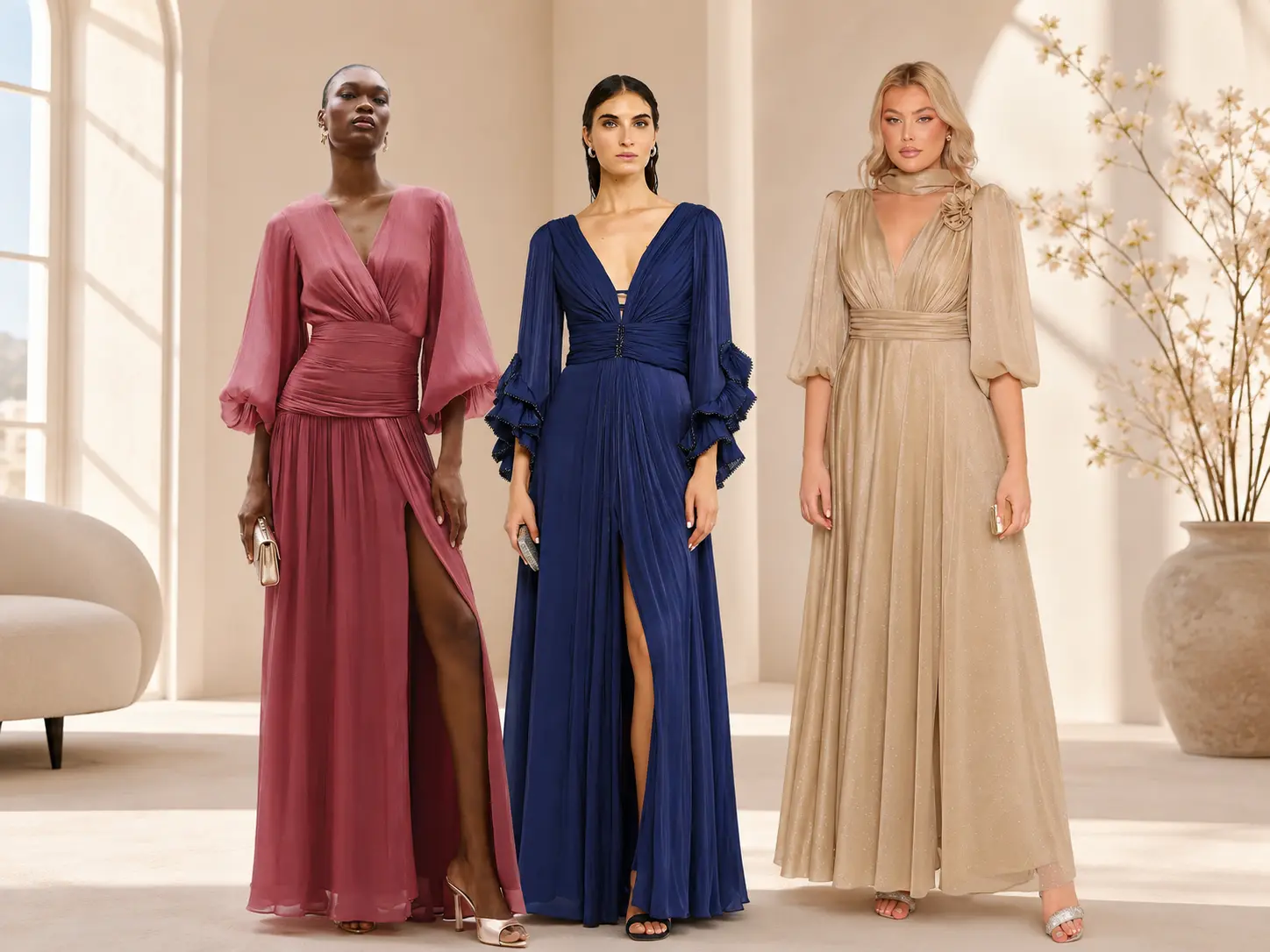
A long formal dress with sleeves is an elegant, refined and highly versatile choice for weddings, formal events and special occasions. It is ideal when you want a sophisticated yet balanced look that enhances the figure without feeling excessive. Sleeves are not only an aesthetic detail: they can make the dress more suitable for the season, the setting of the ceremony and your personal style. In this guide, we will look at when to choose a long dress with sleeves, which styles to prefer and how to pair it with shoes, accessories and outerwear.
When to choose a long formal dress with sleeves
A long formal dress with sleeves is especially suitable when the event calls for composed, polished elegance. It is a perfect option for religious ceremonies, evening weddings, receptions in elegant venues or occasions where you want a more covered look without giving up femininity.
Sleeves are also ideal for transitional seasons, when the weather can be unpredictable and a strapless dress or one with thin straps may feel less practical. In spring, autumn or during an evening ceremony, a style with lightweight sleeves allows you to maintain an elegant and refined appearance without necessarily adding a structured jacket.
This type of dress also works very well when you are looking for a style that discreetly enhances the arms. Sleeves in chiffon, tulle, lace or fluid fabric follow the silhouette naturally and can make the whole outfit look more harmonious.
If you are considering different options for an elegant event, you can start from the selection of long formal dresses and then focus on the sleeved styles that best suit the occasion.
The most elegant long dress with sleeves styles
Not all long dresses with sleeves create the same effect. The final result changes significantly depending on the cut, fabric and shape of the sleeve. To choose the right style, it is useful to start from the occasion and the level of formality required.
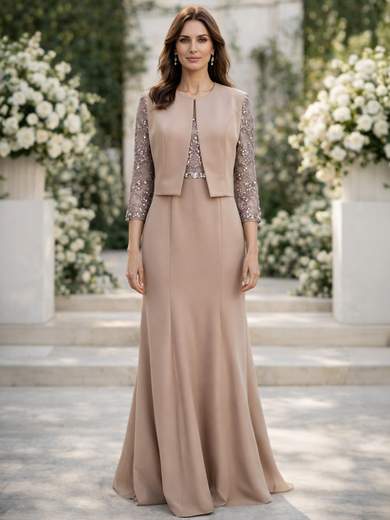
Long dresses with lace sleeves are among the most refined. Lace adds a romantic and precious detail, perfect for weddings, church ceremonies and elegant receptions. It works especially well when the rest of the dress remains clean, with a fluid or slightly flared line.
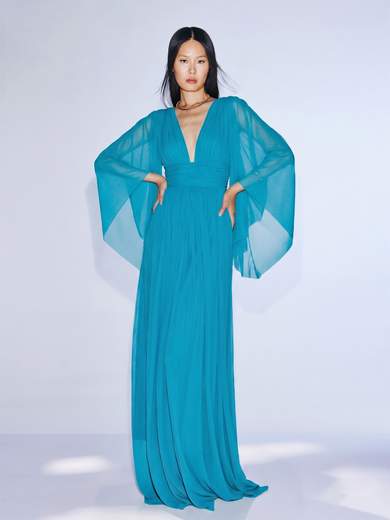
Dresses with chiffon sleeves are lighter and softer. They are ideal for those looking for movement, delicacy and a less structured effect. Chiffon makes the sleeve discreet and airy, especially in long formal dresses for spring or summer ceremonies.
Dresses with fitted long sleeves have a more sophisticated and modern appeal. They are suitable for evening ceremonies or formal events, especially when combined with elegant fabrics and deep colours. In this case, the fit must be impeccable, because a sleeve that is too tight or too rigid can compromise comfort.
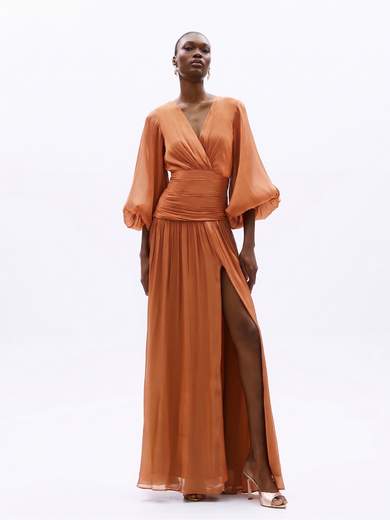
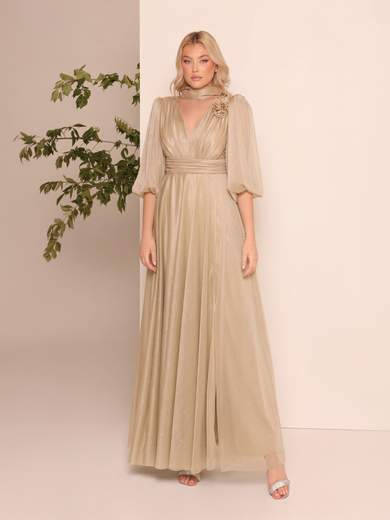
Dresses with three-quarter sleeves are a very versatile middle ground. They reveal the wrist and forearm, making the figure look lighter and leaving space for bracelets or a jewel clutch. They are also suitable for those who want an elegant but not overly austere look.
How to choose a sleeved dress according to the season
The season has a strong influence on the choice of a long formal dress with sleeves. The key is to distinguish between decorative sleeves, mainly designed to complete the dress, and functional sleeves, which also provide more coverage.
In spring, lightweight fabrics such as chiffon, georgette, tulle and fine lace are ideal. Sleeves can be sheer, soft or slightly wide, creating an elegant but not heavy effect. The most suitable colours include powder pink, sage green, powder blue, lavender, antique pink and refined pastel tones.
In summer, a long dress with sleeves should remain fresh and comfortable. It is better to choose lightweight sleeves that are not too fitted and are made from breathable fabrics. Short sleeves, veil-effect sleeves or delicate lace details also work well in this season, especially for outdoor evening ceremonies.
In autumn, a dress with sleeves becomes a particularly strategic choice. Colours can be deeper, such as midnight blue, forest green, burgundy, mauve, bronze or petrol blue. Long or three-quarter sleeves help create a look that feels more appropriate for the season, without immediately needing a heavy outer layer.
In winter, it is better to choose more structured fabrics, elegant lines and long sleeves. A long dress with sleeves can be paired with an elegant coat, a cape or a tailored outer layer, maintaining a sophisticated image even during the colder months.
How to style a long formal dress with sleeves
A long dress with sleeves already has a strong visual presence, so styling choices should be balanced. The goal is to enhance the dress without making the outfit look heavy.
For shoes, the safest choice is an elegant pump, a thin-heeled sandal or a refined slingback. If the dress is very long, the shoe will not always be the main focus, but it will still affect posture, proportions and overall bearing. With light-coloured dresses, nude, champagne, soft silver or powder pink shoes work well. With deeper colours, you can choose tone-on-tone or metallic shoes, as long as they remain understated.
Accessories should work with the type of sleeve. If the sleeves are lace, embroidered or very detailed, it is better to avoid statement bracelets and choose bright earrings or an elegant clutch instead. If, on the other hand, the sleeves are smooth and minimal, you can add a more noticeable jewel while still keeping the overall result harmonious.
Outerwear depends greatly on the context. For a religious ceremony or a cooler season, a lightweight stole, an elegant cropped jacket or a cape can complete the look. However, if the dress already has long sleeves and an important fabric, it is better to choose simple outerwear without overly eye-catching details.
To create a coherent outfit, you can first choose the style from the long formal dresses collection and then build the accessories around the colour, fabric and level of formality of the event.
Who suits a long formal dress with sleeves?
A long formal dress with sleeves is a versatile style that suits many body types. The point is not whether sleeves “look good” or not, but choosing the right shape to enhance proportions and personal style.
Those who want to elongate the figure can choose dresses with a fluid line, a defined waist and lightweight sleeves. A wrap style, a V-neckline or a marked waist helps visually lengthen the silhouette and make the overall look more harmonious.
Those with broader shoulders may prefer soft sleeves that are not too structured. It is better to avoid excessive volume on the upper body, such as very pronounced puff sleeves, if the goal is to balance the figure.
Those with slim arms can enhance them with fitted, sheer or lace sleeves. In this case, the sleeve becomes an elegant and feminine decorative detail without covering too much.
For curvy body types, long dresses with lightweight sleeves, a defined waist and fabrics that glide without clinging work very well. A three-quarter sleeve or a soft sleeve can give proportion to the look and make the dress more comfortable throughout the ceremony.
Mistakes to avoid with a long dress with sleeves
The first mistake is choosing sleeves that are too heavy for the season. A long dress with sleeves can be elegant even in summer, but only if the fabric is lightweight and the style does not feel restrictive. On the other hand, in winter, a sleeve that is too sheer may look out of place.
The second mistake is adding too many accessories. If the dress has embroidered sleeves, lace, sheer details or important embellishments, the rest of the look should remain more essential. Earrings, clutch and shoes should complete the dress, not compete with it.
The third mistake concerns the length. An elegant long dress should skim the floor or fall proportionally according to the shoes chosen. If it is too short, it loses part of its refinement; if it is too long, it becomes uncomfortable and impractical.
Finally, pay attention to the setting of the ceremony. A dress with very dramatic sleeves can be perfect for an evening wedding or a formal event, but may feel excessive for a simple daytime ceremony. The best choice is always the one that combines elegance, comfort and consistency with the occasion.
To find the right balance between style and fit, the most effective solution is to compare different long formal dress styles and evaluate which type of sleeve best enhances the outfit.
FAQ about long formal dresses with sleeves
Is a long formal dress with sleeves suitable for a summer wedding?
Yes, it can also be suitable for a summer wedding, as long as the sleeves are lightweight and made from fabrics such as chiffon, tulle or fine lace. It is best to avoid heavy fabrics or sleeves that are too tight during daytime ceremonies.
What shoes should I wear with a long formal dress with sleeves?
The most suitable shoes are pumps, elegant sandals or slingbacks with heels. The choice depends on the colour of the dress, the season and the formality of the event. With a very detailed dress, it is better to choose refined but simple shoes.
Is a long dress with sleeves appropriate for a church ceremony?
Yes, it is one of the most suitable choices for a church ceremony because it offers composed elegance and greater coverage on the shoulders and arms. It is especially ideal for religious weddings and formal settings.
Are long sleeves or three-quarter sleeves better?
Long sleeves are more elegant and suitable for evening ceremonies or cooler seasons. Three-quarter sleeves are more versatile, lighten the figure and work well in spring or autumn.
What should I wear over a long formal dress with sleeves?
If the dress already has long sleeves, it is better to choose simple outerwear: a lightweight stole, an elegant cape, a cropped jacket or a refined coat during colder months. The outer layer should not make the outfit look heavy.
Does a long dress with sleeves suit curvy body types?
Yes, if chosen with the right cut. The most flattering styles are those with fluid fabrics, a defined waist, a harmonious neckline and soft sleeves. The goal is to follow the figure without clinging too much.
A long dress with sleeves is therefore an elegant, practical and highly refined choice for many formal occasions. The key is to choose the style according to the season, the type of ceremony and your body shape, completing the look with balanced accessories. To start your search, you can explore the selection of long formal dresses and find the most suitable style for your event.