Plus Size, Curvy, Comfort, Calibrated and Conformed Sizes: What Is the Difference?
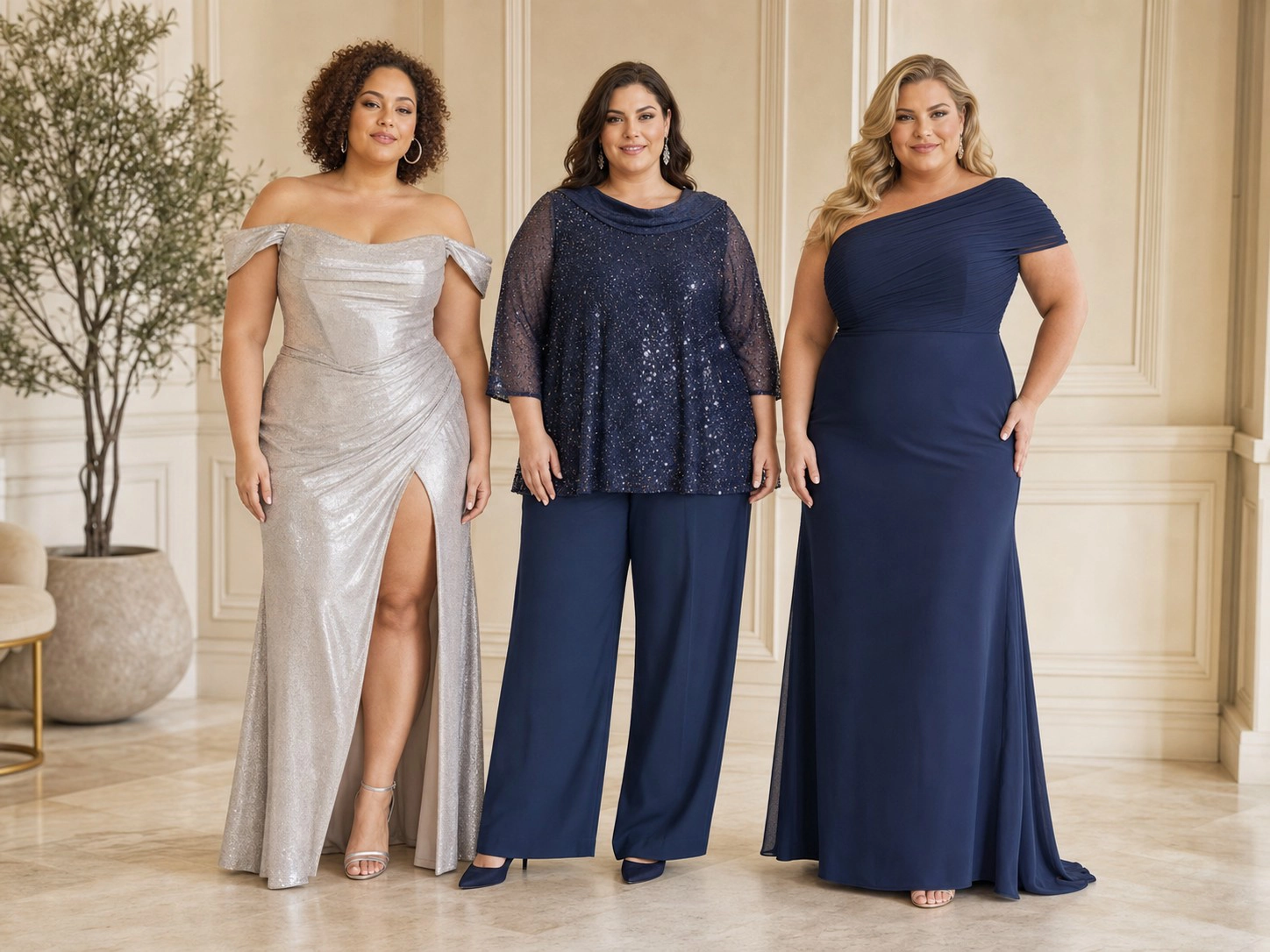
Plus size, curvy, comfort, calibrated and conformed sizes are not always interchangeable terms. Some describe a fashion segment, while others refer to fit or to the way a garment is drafted around body proportions. Most importantly, none of these labels can replace an accurate size chart. Understanding the difference makes it easier to compare labels, choose with confidence and assess an occasion dress more effectively. This guide explains the terminology, the mistakes to avoid and the practical checks to make before browsing a collection of comfortable plus-size formal dresses.
What clothing size labels really tell you
A clothing size is meant to connect body measurements with the dimensions of a garment. In practice, numbering changes between countries, brands, collections and even styles made by the same label. An Italian size 50, a 3XL and a numbered curvy size should therefore never be treated as equivalent without checking the relevant chart.
The words used in fashion serve different purposes. “Plus size” usually identifies an extended range beyond a brand’s standard line. “Curvy” primarily describes the audience and the approach to fit. “Comfort size” emphasises ease or range. “Calibrated” and “conformed”, meanwhile, are terms used by some Italian brands for garments drafted around proportions that differ from those produced by simply enlarging every measurement of a regular size.
There is no universal threshold at which a woman becomes “curvy”. One brand may launch its dedicated range at an Italian 46, another at a 48, while others include the same measurements in the main collection. The number on the label is a technical reference, not a judgement about the body.
Plus size, curvy and comfort sizing: related but not identical
Plus size is the most widely used international term for clothing offered above a brand’s standard size range. It is a category label: by itself, it does not explain how the garment was drafted or how it will fit.
Curvy is a contemporary, inclusive description. It may identify a collection designed to accommodate the bust, waist and hips through dedicated cuts, but it does not correspond to one specific size. Two women who wear the same number may have different proportions and prefer different garment constructions.
Comfort size or comfortable sizing is less standard in English and is often a translation of the Italian commercial expression taglie comode. It may refer to extended sizing, a more relaxed fit or stretch fabrics. It does not automatically mean that a garment runs large: measurements, fabric composition and fit notes are still required.
International letter sizes also vary. XL, 2XL and 3XL do not have exactly the same measurements across every market or label. When comparing Italian and international collections, bust, waist and hip measurements in centimetres or inches are more reliable than the letters alone.
Calibrated and conformed sizes depend on garment construction
A calibrated size is not simply a larger regular size. Where this system is used, the pattern is developed with a different distribution of volume across the upper torso, bust, waist, hips and arms. The aim is to improve the drape of the garment, reduce pulling and unwanted creasing, and provide freedom of movement where it is needed most.
Conformed size is also used inconsistently. In some Italian catalogues it is close in meaning to calibrated sizing; in others it describes a line adapted to particular proportions, especially around the waist, abdomen and hips. It is therefore unhelpful to impose one absolute distinction on every brand. The correct meaning is the one stated in the brand’s size guide and product description.
The numbering may also differ. Some calibrated Italian lines use odd numbers such as 39, 41, 43 or 45 and associate them with ranges of conventional Italian sizes. These pairings are not universal. A calibrated 43 from one brand may not match a 43 from another. Always compare body measurements and, when available, the actual garment dimensions.
This is particularly important for formalwear, where the bodice, waist placement, armhole and skirt must all work together. A collection of curvy formal dresses may include several constructions and fabrics, each of which should be assessed in relation to your proportions and the specific fit information.
A quick comparison for reading a product page
| Term | What it usually means | What it does not guarantee | How to check |
|---|---|---|---|
| Plus size | A range extending beyond the standard line | A dedicated pattern or identical fit across brands | Read the size chart and style description |
| Curvy | A line aimed at fuller figures and varied proportions | A universal numerical threshold | Check where the range begins and how it is cut |
| Comfort size | Ease, extended sizing or a relaxed fit | That the garment automatically runs large | Review fabric, stretch and fit notes |
| Calibrated | Dedicated proportions and pattern development | The same conversion for every brand | Compare bust, waist and hips with the line’s chart |
| Conformed | A construction adapted to specific proportions | One technical meaning across all catalogues | Follow the manufacturer’s own definition |
The comparison shows why one label cannot determine the correct size. Before buying, look for four pieces of information: the reference body measurements, the fabric and its stretch percentage, the silhouette, and style-specific fit notes. If any of these details is missing, asking for assistance is a sensible next step.
How to use these differences when choosing a formal dress
Measure your bust, waist and hips with a dressmaker’s tape held parallel to the floor. Do not pull it tight or hold your breath. Wear underwear similar to what you expect to use for the event and record the results. If a brand distinguishes the upper torso from the fullest part of the bust, take both measurements according to its instructions.
Compare every measurement with the chart for the style. If they point to different sizes, identify the least adaptable area of the garment. On a structured bodice it may be the bust; on a close-fitting style it may be the waist or hips. Do not automatically size up. The cut, seams, lining and fabric stretch all affect the decision. An A-line dress, for example, may need accuracy at the bust and waist while allowing more room through the hips.
During a fitting, the dress should fasten without pulling, allow you to sit and raise your arms, keep its seams in the correct position and fall without tight horizontal creases. Comfort does not come from an excessively loose garment; it comes from balanced proportions. Minor alterations to the hem or sleeves are common, while changes to the shoulders, armholes or bodice structure may be more complex.
When you are ready to compare silhouettes, fabrics and finishing details, explore formal dresses for curvy women and read the available sizes and fit characteristics for each style. The aim is not to fit your body into a label, but to find a garment that works with your proportions and lets you enjoy the occasion with confidence.
Frequently asked questions about plus-size and calibrated sizing
At what size is someone considered curvy?
There is no universal threshold. Some dedicated Italian collections begin around sizes 46 or 48, but each brand defines its own range. Body measurements and garment fit are more useful than the category label.
Do “plus size” and the Italian “taglie forti” mean the same thing?
They generally describe the same market segment. “Plus size” is the international expression, while taglie forti is the traditional Italian term. Neither provides precise measurements on its own.
What is the difference between calibrated and conformed sizing?
Both may describe garments developed around dedicated proportions, but manufacturers do not use the terms in exactly the same way. Read the definition and size chart supplied by the individual brand.
What do calibrated sizes 39, 41, 43 or 45 correspond to?
The conversion depends on the collection. Odd numbers are used by some Italian brands for calibrated systems, but there is no general conversion rule. Use the bust, waist and hip measurements in the relevant chart.
Should I choose the larger size if I am between sizes?
Not automatically. Consider the most important measurement for the style, the amount of stretch and your preferred fit. More room may be helpful for a structured, non-stretch dress, while a soft stretch style may fit differently.
Prodotti consigliati blog