Sheath Dress or Long Gown for a Ceremony: Which Should You Choose?
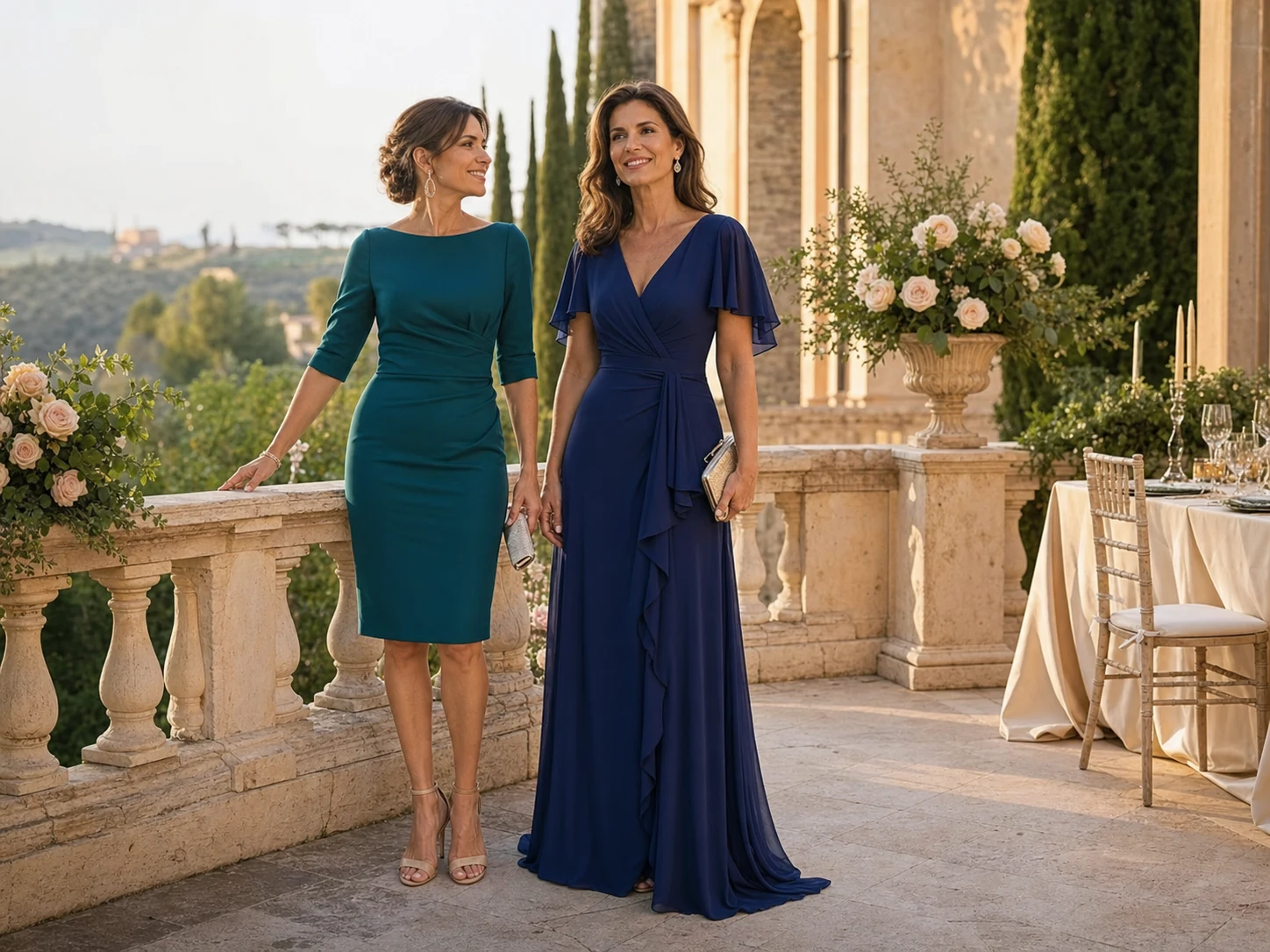
Choosing a sheath dress or a long gown for a ceremony depends mainly on the time, formality, venue and your role, rather than on a fixed hierarchy of elegance. A sheath dress is often ideal for daytime events, civil weddings and receptions where polish and freedom of movement both matter. A long gown becomes more appropriate when the ceremony is in the evening, particularly formal or governed by an evening dress code. The right style should also flatter your proportions and feel consistent with the setting. This guide compares both options and explains when to consider elegant sheath dresses for a ceremony.
The choice depends on the dress code, not only on length
A long gown is not automatically more elegant than a sheath dress. Elegance comes from the quality of the silhouette, fit, fabric and the coherence of the complete outfit. A well-cut sheath dress in crêpe, cady or matte satin can be more appropriate than an elaborate floor-length gown at a daytime ceremony. Equally, a restrained flowing gown may suit an evening reception better than a short dress covered in conspicuous embellishment.
Start by checking whether the invitation specifies a dress code. Terms such as black tie or evening dress generally point towards a long gown. A cocktail code favours a knee-length or midi dress, while an elegant wedding without an explicit code gives you more flexibility. When no instructions are provided, consider the time, venue and overall tone together.
The part of the event you will attend also matters. A morning religious service followed by lunch calls for a different level of formality from dinner at a villa with music and dancing. If the ceremony spans several settings, choose a balanced outfit that can move from the service to the reception without feeling either underdressed or excessive.
Finally, think about your role. A guest may prioritise discretion and versatility, while a bridesmaid, witness or mother of the bride or groom may choose a more structured presence without competing with the bride. Length is therefore the result of context, not the only starting point.
When to choose a sheath dress for a ceremony
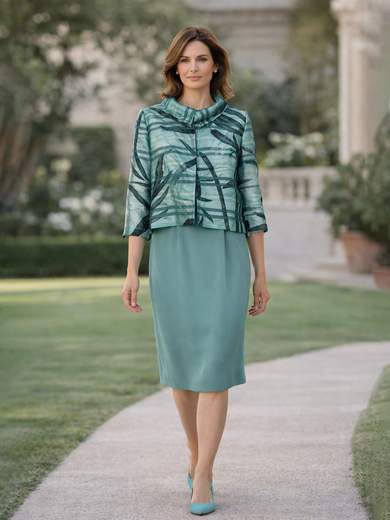
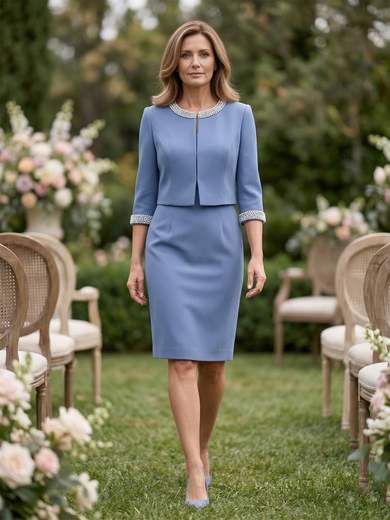
A sheath dress is particularly effective when the event takes place during the day or afternoon, the service is civil, the venue is urban, or the reception involves moving between locations. Its clean line communicates precision and creates a formal look without relying on substantial volume. A hem at or just below the knee is the most versatile choice, while a midi sheath can increase the level of formality without losing practicality.
The fit should never feel restrictive. The dress should follow the body, allow you to sit and walk naturally, and keep its seams in the correct position. A structured fabric supports the silhouette, while a small percentage of stretch can improve comfort. Side draping, panels and considered seaming can soften the closeness of the fit without changing the essential identity of the dress.
For a daytime ceremony, sophisticated light colours, pastels, blue, green, dusty rose or a restrained print work well. In the evening, deeper colours and more precious details can be introduced. Black is not universally forbidden at a wedding, but it should be handled carefully, especially during the day. Pale accessories, luminous metals and a softer texture can make it feel less severe.
A sheath dress is also useful if you want to wear the garment again. By changing the jacket, wrap, shoes and jewellery, the same style can suit several occasions. Anyone looking for an elegant, adaptable foundation can compare women's sheath dress styles, considering neckline, sleeves, waist placement and length in relation to the event.
A very short, extremely tight or deeply cut sheath dress is best avoided when the ceremony is religious or particularly formal. You do not need to abandon the silhouette: choose more restrained proportions and plan a suitable shoulder covering for the service.
When a long gown is the more appropriate choice
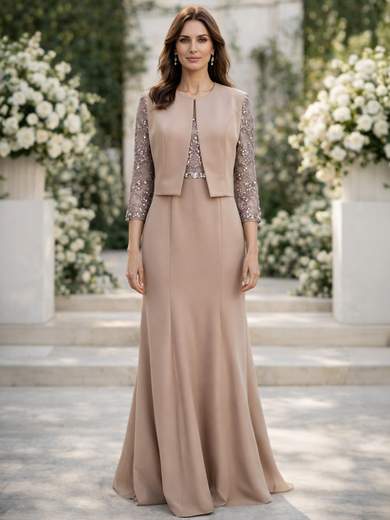
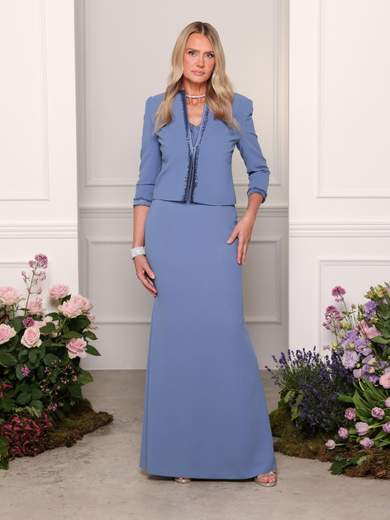
A long gown is at its best at evening ceremonies, formal receptions and impressive venues such as villas, palaces or historic halls. It is often the most coherent option when the invitation explicitly asks for evening dress or when the event has a gala-like atmosphere. The uninterrupted length supports fluid fabrics, draping and movement in a way that a knee-length style cannot reproduce.
Long does not have to mean voluminous or heavily decorated. To avoid looking overdressed, choose a fluid line, one strong colour and measured detailing. All-over sequins, dramatic trains and red-carpet construction require a genuinely formal event. At an elegant but traditional wedding, they may attract more attention than is appropriate for a guest.
Practicality deserves a realistic assessment. A long gown should allow you to climb stairs, sit, dance and walk across the venue. In a garden, on a beach or over uneven paving, a hem that nearly touches the ground can become inconvenient. Always try the dress with the intended shoes, as even a small change in heel height affects both the drape and the safety of your step.
A floor-length dress can still work at a morning ceremony if the fabric is light, the colour suits daylight and the construction remains understated. It is less suitable when the reception is informal, the day involves frequent travel or the stated dress code clearly suggests cocktail length.
Sheath dress and long gown compared
| Criterion | Sheath dress | Long gown |
|---|---|---|
| Time | Ideal for daytime, afternoon and cocktail events | Especially suited to evenings and formal occasions |
| Formality | From semi-formal to formal, depending on fabric and detail | From formal to very formal when the dress code requires it |
| Venue | Practical in cities, town halls, restaurants and multi-location events | Enhanced by villas, palaces and evening receptions |
| Freedom of movement | Generally high when the fit is correct | Depends on the hem, skirt volume and ground surface |
| Repeat wear | Easy to restyle with accessories and outer layers | More closely tied to formal occasions unless very minimal |
The comparison does not produce a universal winner. If both styles respect the dress code, choose the one that fits better and lets you enjoy the event without constant adjustment. A dress that pulls, slips or restricts your stride loses its elegance even if its length is theoretically correct.
Use five steps to decide: read the invitation, identify the most formal part of the day, assess the venue's surfaces, try the dress with the intended shoes and underwear, and view the complete outfit in natural light. If the setting allows both options and you want versatility, a collection of occasion sheath dresses provides different sleeves, necklines and proportions to compare.
Frequently asked questions about sheath dresses and long gowns
Is a long gown compulsory for an evening wedding?
No. A long gown is recommended when the reception is very formal or the dress code requests it. For an elegant dinner without specific instructions, a knee-length or midi sheath dress in a refined fabric can also be appropriate when paired with coherent accessories.
Can I wear a sheath dress to a religious ceremony?
Yes, provided the length, neckline and fit are restrained. If the dress is sleeveless or open across the shoulders, use a coordinated jacket, wrap or bolero during the service.
Which style is best for a civil wedding?
A sheath dress is often an excellent choice because it combines polish, elegance and practicality, especially for a town hall ceremony followed by lunch or drinks. A restrained long gown remains possible when the venue and formality of the reception support it.
Can I wear a long dress to a daytime ceremony?
Yes, but favour a light fabric, a colour that works in daylight and limited embellishment. If the event is semi-formal or includes frequent movement between venues, a midi or knee-length style may feel more balanced and practical.
How can I tell if a sheath dress is too short for a wedding?
A hem at or just below the knee is the safest choice for a ceremony. A dress that sits well above the knee may look insufficiently formal, particularly at a religious service or an elegant event. Check the length while seated as well as standing.