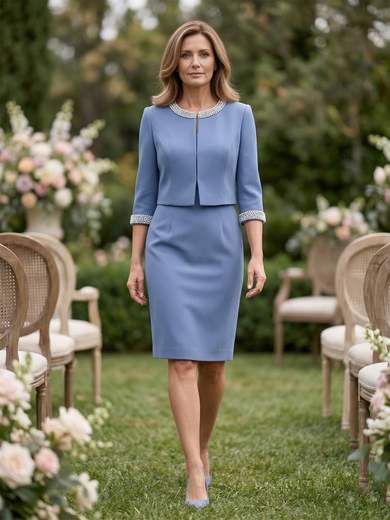
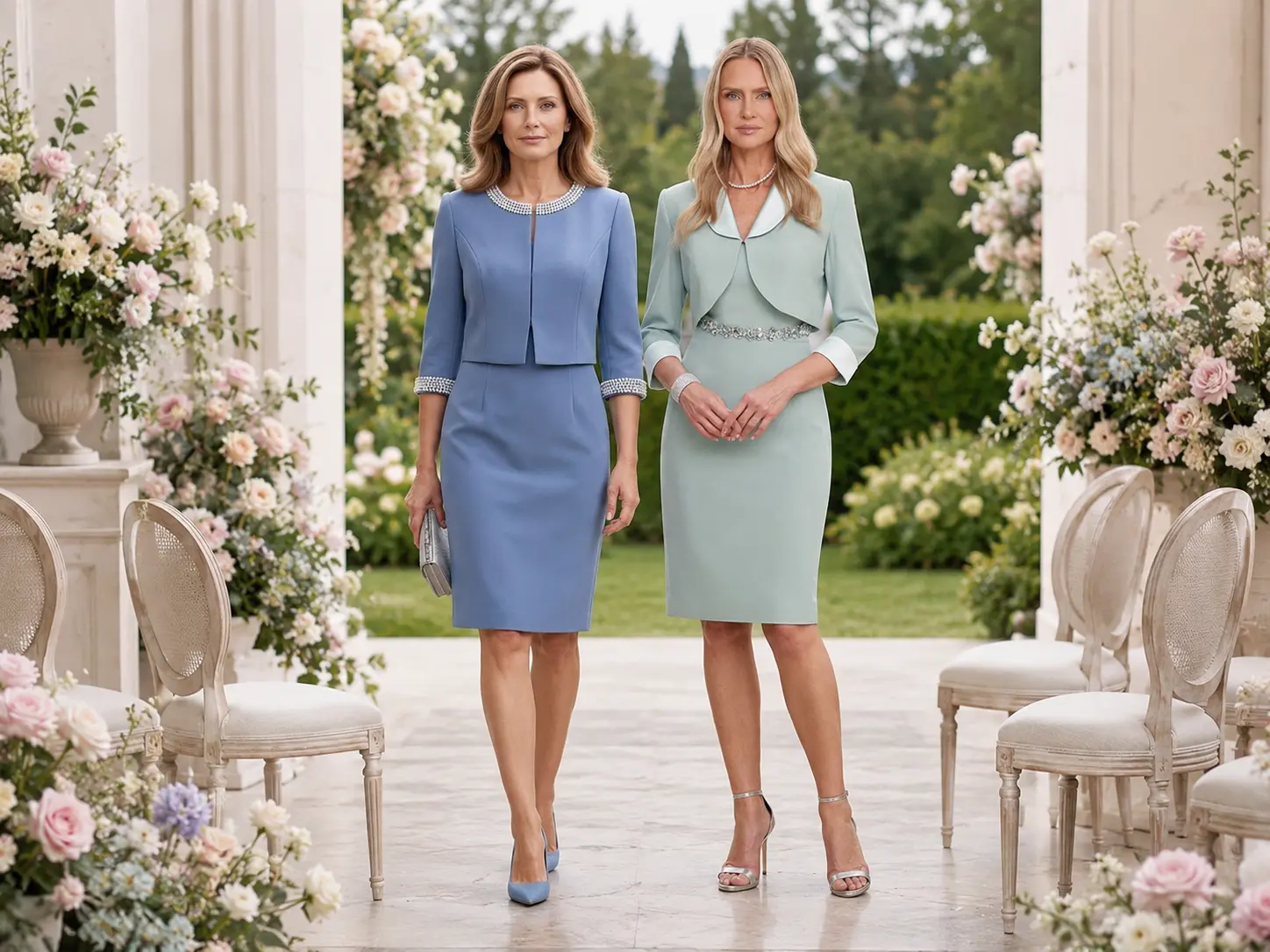
Short formal dress etiquette helps you understand when a dress above or just below the knee can be an elegant, refined and appropriate choice for a special occasion. Not every event requires a long gown: for daytime weddings, less formal ceremonies, summer receptions and elegant yet dynamic settings, a short dress can enhance the figure without looking out of place. The key rule is to choose lengths, fabrics, colours and accessories that are consistent with the dress code, the guest’s role and the level of formality of the event.
When can you wear a short dress to a formal event?
A short dress can be worn to a formal event when the setting allows it and the style remains tastefully elegant. It is especially suitable for daytime weddings, baptisms, communions, confirmations, graduations, anniversaries and receptions that are refined but not excessively formal. In these cases, a short dress offers the ideal balance between elegance, practicality and femininity.
According to etiquette, dress length is one of the most important elements. A style just above the knee, knee-length or slightly below the knee is generally more appropriate than a very short mini dress. A ceremony always requires a certain sense of measure: the dress can be modern and flattering, but it should not look provocative or too casual.
When choosing among different short formal dresses, it is useful to start from the time of the event. For daytime occasions, soft lines, bright colours, lightweight fabrics and delicate details work well. For late afternoon or evening events, you can opt for more structured styles, deeper shades and elegant finishes, as long as the overall look remains harmonious.
A short dress is also a good choice when the event involves moving around, outdoor moments or an informal yet carefully styled reception. In these situations, a long dress may feel less practical, while a short style allows greater freedom of movement without compromising elegance.
When is it better to avoid a short elegant dress?
There are situations where etiquette suggests more caution. A short dress may be less suitable for very formal ceremonies, evening weddings with a black-tie dress code, gala events or receptions held in particularly solemn venues. In these cases, a long or midi dress may be more consistent with the required level of elegance.
It is also best to avoid styles that are too tight, excessively low-cut, transparent or very short. The issue is not the short length itself, but the overall effect. A short formal dress should communicate care, class and appropriateness, rather than attract attention in an excessive way.
Another situation where a short dress should be considered carefully is when you have an important role at the event. A bridesmaid, maid of honour, mother of the bride or mother of the groom should choose especially refined styles, with more composed lengths and high-quality fabrics.
The venue also influences the choice. In a church, a historic palace or a very formal location, it is better to avoid overly bold cuts. If, however, the reception takes place in a garden, villa, farmhouse or summer venue, an elegant short dress can be perfectly appropriate.
The right length for a short formal dress
The ideal length for a short formal dress is usually between a few centimetres above the knee and knee-length. This measure is elegant, feminine and suitable for most special occasions. It enhances the legs without making the look feel too informal.
A knee-length dress is one of the safest options according to etiquette. It is suitable for religious ceremonies, family events and daytime weddings. It can be chosen with a flared skirt, pencil line, A-line cut or soft silhouette, depending on body shape and personal style.
A dress just above the knee is appropriate when the style is well balanced. If the skirt is short, it is better to choose a more discreet neckline, light sleeves or a silhouette that is not too tight. Conversely, if the upper part of the dress is more important, the length should be more composed.
Very short mini dresses, on the other hand, are less suitable for formal occasions. Even when made from elegant fabrics or enriched with refined details, they risk looking closer to a party outfit than a guest outfit. For this reason, those who want a modern effect should choose elegant short dresses for formal occasions with balanced proportions and sophisticated details.
Colours, fabrics and details: what etiquette suggests
Short formal dress etiquette is not only about length, but also about colours, fabrics and details. For a daytime event, light colours, pastel tones, blush pink, sky blue, sage green, lilac, antique rose, luminous beige and delicate shades are suitable. These hues are elegant, appropriate for a festive setting and easy to match with understated accessories.
For an evening event, you can choose deeper colours such as midnight blue, forest green, burgundy, plum, teal or black, if the dress code and setting allow it. Black, although elegant, should be handled carefully at weddings: it can work when softened by luminous accessories, refined fabrics or feminine details.
White, however, is generally best avoided at weddings, as it is traditionally reserved for the bride. Ivory, cream and shades very close to white should also be considered with caution, especially if the dress has an important or romantic cut.
The most suitable fabrics are those that convey quality and attention to detail: chiffon, crepe, lightweight mikado, satin, elegant lace, organza, discreet tulle or fluid fabrics. Cotton that is too casual, sporty jersey or excessively clingy materials can make the look feel less appropriate for a formal event.
Details should also be well balanced. Luminous applications, embroidery, draping, ruffles, special sleeves or jewelled belts can enrich the dress, but the overall look should remain measured. A short formal dress is elegant when every element works together without creating excess.
How to make a short formal dress look elegant
A short dress becomes truly suitable for a formal event when it is completed with coherent accessories. Shoes, bag, jewellery and outerwear can immediately elevate the look, transforming a simple dress into a refined outfit.
The ideal shoes are pumps, slingbacks, elegant sandals or shoes with a medium heel. Very high heels are not always necessary: a slim heel or a well-proportioned shoe often makes the overall look more sophisticated. For outdoor ceremonies, it is better to avoid very thin heels if the ground is not stable.
The bag should be small and well proportioned. Clutches, evening bags and mini bags are more suitable than large daytime bags. The colour can pick up one of the shades of the dress or create an elegant contrast, as long as it does not weigh down the final result.
Outerwear is also important, especially for religious ceremonies or evening receptions. A stole, bolero, elegant blazer or cropped jacket can make the look more complete and respectful of the setting. The outer layer should not look like a casual addition, but rather like an integral part of the outfit.
For a refined look, the best starting point is to choose short formal dresses for women designed specifically for elegant events, and then build balanced accessories around them. In this way, the dress remains the focus, while the final result looks polished and harmonious.
Mistakes to avoid when wearing a short dress to a formal event
The first mistake is confusing a short formal dress with an overly bold evening dress. A formal occasion requires elegance, not only visual impact. Deep necklines, excessive slits, pronounced transparencies or mini lengths can look unsuitable, especially in formal or religious settings.
Another common mistake is ignoring the dress code. When the couple or organisers indicate a specific style, it is important to respect it. If the dress code requires a long gown, black tie or a particularly formal level of elegance, a short dress may not be the most appropriate choice.
Accessories can also compromise the look. Shoes that are too casual, large bags, excessive jewellery or poorly coordinated colours can reduce the refinement of even a well-chosen dress. The most effective rule is to seek balance: if the dress is rich in detail, accessories should be discreet; if the dress is simple, you can add one luminous detail.
Finally, it is important not to choose only according to trends. A short formal dress should enhance the person wearing it, respect the setting and remain comfortable throughout the event. A dress that is elegant but uncomfortable, too tight or inconsistent with your personality will rarely create a convincing result.
FAQ about short formal dress etiquette
Can you wear a short dress to a wedding?
Yes, a short dress can be worn to a wedding, especially if the ceremony takes place during the day or in a setting that is not excessively formal. It is important to choose a composed length, elegant fabrics and appropriate accessories.
How short should a formal dress be?
The most suitable length is just above the knee, knee-length or slightly below the knee. Very short mini styles are less appropriate because they can look too informal or not aligned with formal event etiquette.
Is a short dress elegant for an evening event?
Yes, it can be, provided the style is refined and the setting does not explicitly require a long gown. For evening events, deeper colours, structured fabrics and discreet luminous details are especially suitable.
Which colours should you avoid for a short wedding guest dress?
White and shades very close to white are generally best avoided, as they are reserved for the bride. Very bright or overly eye-catching colours should also be evaluated according to the type of ceremony and the dress code.
What should you wear over a short formal dress?
You can choose a stole, bolero, elegant blazer, cropped jacket or refined cover-up. The outer layer should be consistent with the dress in terms of colour, fabric and level of formality.
Is a short dress suitable for a bridesmaid or maid of honour?
It can be, but it should be especially elegant and well balanced. For a bridesmaid or maid of honour, knee-length or slightly longer short styles, refined fabrics and a sober yet polished look are preferable.
In conclusion, short formal dress etiquette does not forbid short dresses: rather, it encourages choosing them with care. When length, fabric, colour and accessories are consistent with the occasion, a short style can be an elegant, modern and perfectly appropriate choice for many formal events. To find the most suitable style for your occasion, explore the selection of short formal dresses and choose refined lines, balanced proportions and details designed to enhance your look.