Short or long jacket with a sheath dress: choosing the right length
To choose a short or long jacket with a sheath dress, look at where it ends in relation to your waist, hips and dress hem. A shorter jacket leaves more of the dress visible; a longer one moves the dividing line between the two pieces further down. Neither is universally better: the right choice depends on the effect you want and how the outfit falls when you wear it. The most useful comparison starts with the same dress, tried on with different jacket lengths. Here is how to assess those proportions without relying on a fixed measurement or choosing by the style name alone.
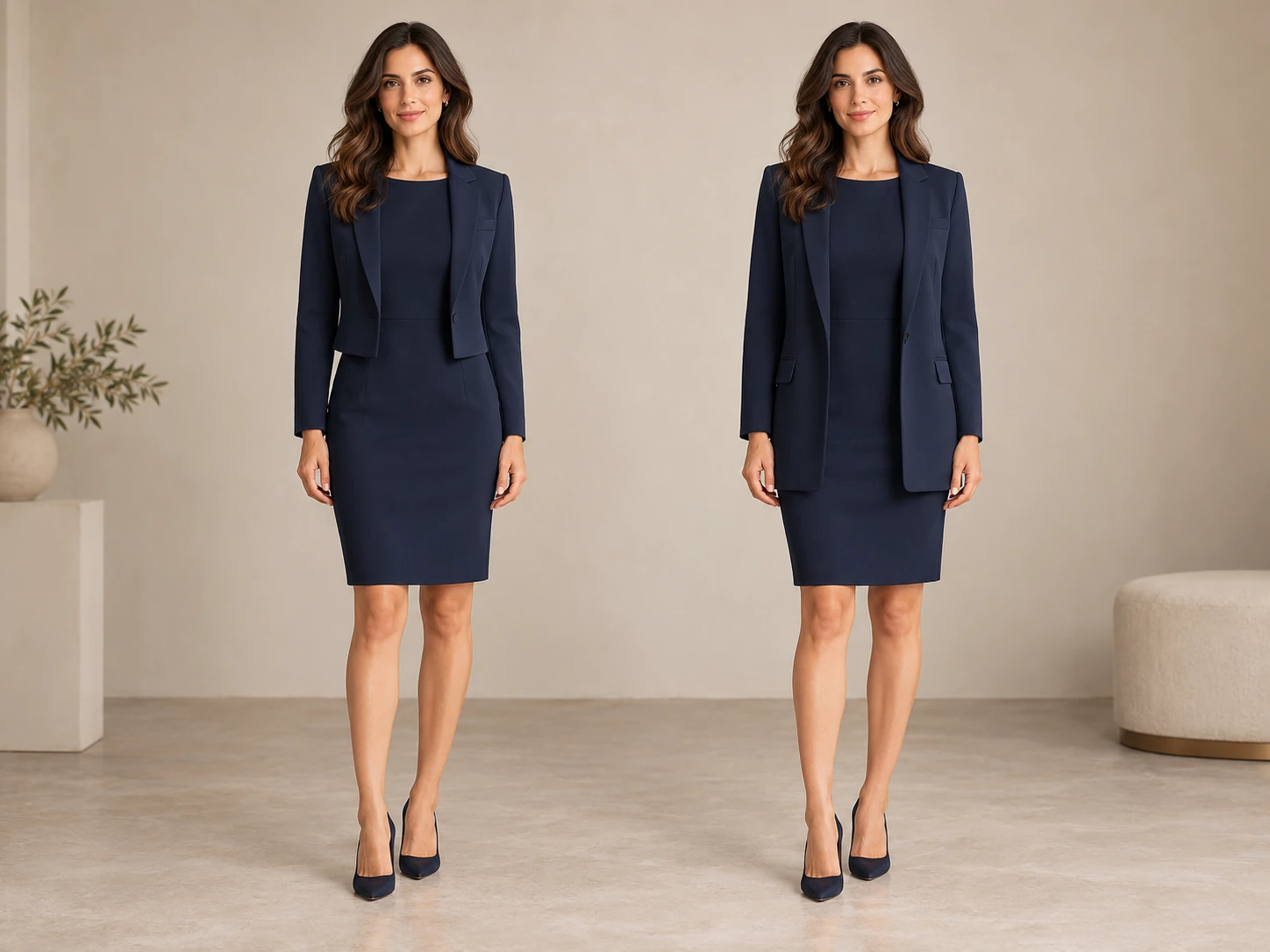
Where should the jacket end on a sheath dress?
The jacket should end at a point that makes the relationship between the two pieces feel intentional. It might define the waist, sit just below it or extend over the hips. Before deciding how long it should be, look at the shape of the dress. A sheath with a clearly defined waist provides a different reference from a straighter style, where the continuous vertical line is the main feature.
In the mirror, identify three reference points: the waist of the dress, the fullest part of the hips and the dress hem. Then check where the jacket hem sits. If it meets a seam or an important detail, consider whether it highlights that feature or interrupts it. A small change in length can alter how much of the dress is visible and where the eye is drawn.
Also consider the shape of the hem itself. A rounded front, a straight edge and an asymmetric cut can create different effects even when their back measurements are similar. Length alone does not tell the whole story. When comparing sheath dress and jacket outfits, look at the two pieces together and use their relationship as your guide.
A short jacket: keeping the dress silhouette visible
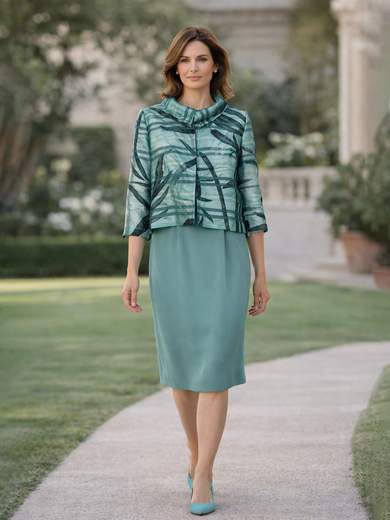
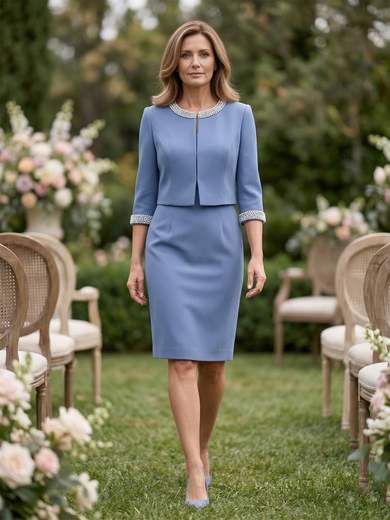
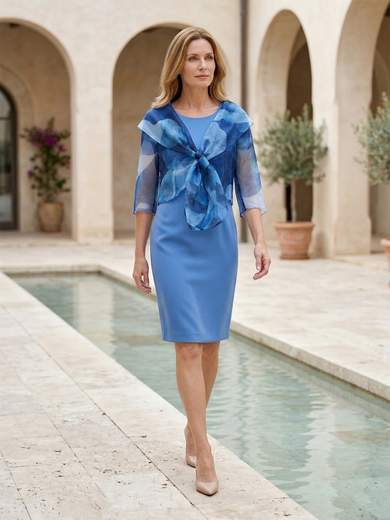
A jacket that finishes at or just below the waist leaves much of the sheath dress visible and makes the transition between the bodice and the lower part of the dress more apparent. It is worth trying when you want the dress construction to remain a clear part of the outfit, particularly if you like its defined waist or the way it sits over your hips.
Picture a knee-length sheath with a waist seam. A short jacket ending close to that seam can create a clear, tidy division. If the hem sits just above a bow, belt or decorative detail, check that it does not press against it and that the detail does not look as though it is accidentally peeking out from beneath the fabric.
Short does not necessarily mean fitted. A cropped, boxy jacket creates a different volume from a short, shaped one. With the first, look at the relationship between the width of the upper body and the narrower line of the sheath. With the second, check that the shaping of both garments works together without pulling. Length works best when the volume also supports the effect you want.
This option is not limited to daytime occasions. The level of formality also depends on the construction and details of the outfit: a short hem does not determine it on its own. Assess length for its effect on proportion, then consider the setting in which you plan to wear the dress separately.
A long jacket: assessing how much dress remains visible
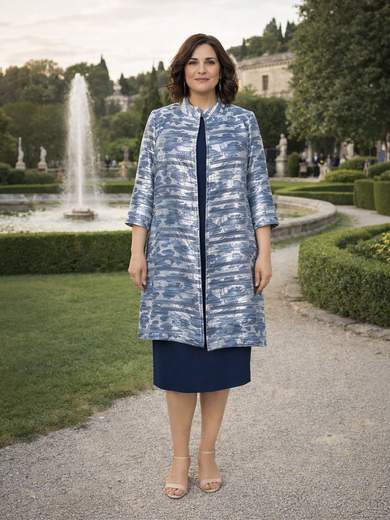
A jacket extending over the hips or towards the upper thigh changes the visual balance of the outfit. It leaves less of the dress exposed around the middle and gives the outer layer a larger role. It can be appealing when you prefer a shape that continues beyond the waist or an open front that frames the sheath with two vertical lines.
First, look at the portion of dress visible beneath the jacket. If only a narrow strip of fabric remains, consider whether the combination looks deliberate or whether the dress seems to be emerging from a jacket that ends too close to its hem. This is not a forbidden combination: similar lengths can work, but they deserve a careful look from both the front and the side.
Next, assess the width. A long, relaxed blazer over a streamlined sheath creates a contrast in volume; a shaped long jacket follows the dress silhouette more closely. If the hem ends at the fullest part of the hips, check whether it stays smooth or flares out at the sides. How the fabric falls matters as much as where it ends.
Finally, look at the jacket front in the way you expect to wear it. The dress is revealed differently when the jacket stays open and when it covers the bodice. To compare two lengths usefully, keep the same arrangement during the fitting. Otherwise, you may mistake the effect of an open front for an effect caused by length.
Knee-length or midi sheath: how the comparison changes
The same jacket can look balanced with a knee-length sheath and create a different effect with a midi version. What changes is the distance between the two hems and, therefore, the amount of dress left on show. Start with the actual length of the dress on your body, rather than relying only on the label “short” or “midi”.
With a knee-length sheath, a short jacket leaves a generous section of dress visible. A longer blazer may bring the two hems closer together. Look at this combination from the side to see whether the jacket hem follows the dress line or introduces volume you do not want. There is no need to impose a fixed gap between the garments.
With a sheath that ends below the knee, more fabric remains visible even when the jacket covers the hips. A cropped style places the division near the waist; a longer one distributes the visible areas of the outfit differently. Try both with the same shoes so that the comparison stays focused on the dress and jacket, rather than changing because of heel height.
If the sheath has a slit or a decorative hem, also check how much of it remains visible and how it moves when you walk. You do not have to display every detail, but it helps to choose deliberately which features you want to show. A jacket covering part of the dress can be right for you if the overall result matches the look you have in mind.
A practical fitting to compare two lengths
The clearest way to decide is to change one element at a time. Wear the same sheath dress and shoes, then compare a shorter and a longer jacket. If you are trying different matching outfits, remember that the cut of the dress can also affect the result. The comparison will be useful, but the conditions will not be identical.
- Look at a full-length front view. Check where the jacket ends and how much of the dress shows below it. Step back from the mirror to see the whole outfit.
- Check the side view. See whether the hem falls close to the body or stands away from it, particularly when it ends over the hips.
- Look at the back. The front may appear cropped while the back extends further down. Assess the actual length on both sides.
- Move and sit down. Check whether the hem rests comfortably over the dress or gathers into folds. A pleasing proportion also needs to work in use.
- Compare two photographs taken under the same conditions. Full-length pictures with a similar camera height and distance help you remember the differences without introducing a new perspective.
Before buying, use these reference points when looking at images of elegant sheath dresses with jackets. If garment measurements are provided, compare them with a dress and jacket you already own. The fit on the model is a visual reference; where the hem falls on you will depend on your proportions and the chosen cut.
Mistakes that make the comparison less useful
The first mistake is choosing a long jacket simply to cover part of the body without checking where its hem lands. Extra length does not guarantee the effect you want. If the hem flares out or creates unexpected volume, it may draw the eye to that very area. Look for a drape you enjoy rather than placing all the emphasis on measurements.
The second is assuming that a short jacket is automatically more balanced. A stiff or very wide hem can create a pronounced division against the sheath. If you prefer a softer transition, try a different cut before ruling out that length. Often, it is the combination of length and shape that needs to change.
The third is confusing a proportion issue with a fit problem. If the jacket pulls, rides up or will not lie smoothly, do not assess its hem as though it were sitting in its intended position. First check that the two garments can be worn comfortably together; only then compare the effect of a shorter or longer jacket.
Your final choice should answer a specific question: do you want the dress silhouette to lead the outfit, or would you like the jacket to occupy more visual space? Find the hem position that supports that preference and check the result in motion. You can then explore sheath dresses with matching jackets with a clear criterion, rather than searching for a length that works for everyone.
Frequently asked questions about jacket length with a sheath dress
How do I measure jacket length to compare it with a sheath dress?
Follow the measuring method given in the garment information, as the starting point can vary. During a fitting, focus on where the hem falls on your body while wearing the dress. A measurement without a stated starting point does not allow a reliable comparison.
Does a belt on the dress mean I need a short jacket?
No. A short jacket may leave it visible; a longer open jacket can frame it. Check that the belt, buckle and jacket fabric do not interfere with one another. Your choice also depends on how much you want that detail to show.
Do three-quarter sleeves make a jacket shorter?
No: sleeve length and the length of the jacket body are separate measurements. Sleeves can alter the impression of the upper body, but the relationship with the dress is assessed by looking at the jacket hem.
Can I shorten a jacket if I do not like the combination?
Ask a tailor to assess the specific garment first. Pockets, buttons, vents, lining and hem shape may restrict the alteration or change its appearance. Do not assume that shortening will always be an available solution before you buy.
Can the jacket be longer than the sheath dress?
It can be an intentional choice, but it changes how the outfit is read because the dress becomes less visible. Also assess the result with the jacket front closed and while moving, checking that it matches the effect you want.