What Bra Should You Wear with a Backless Dress?
To decide what bra to wear with a backless dress, start with the lowest point of the opening. A low-back band may work if it stays fully beneath the fabric; a deeper opening means considering options without a back band, or assessing the support already built into the dress. The front neckline, side openings and your comfort matter too. Coverage, shaping and support are different needs: an accessory that provides one does not automatically provide the others. This guide helps you shortlist underwear to try with your dress before relying on a combination for an entire occasion.
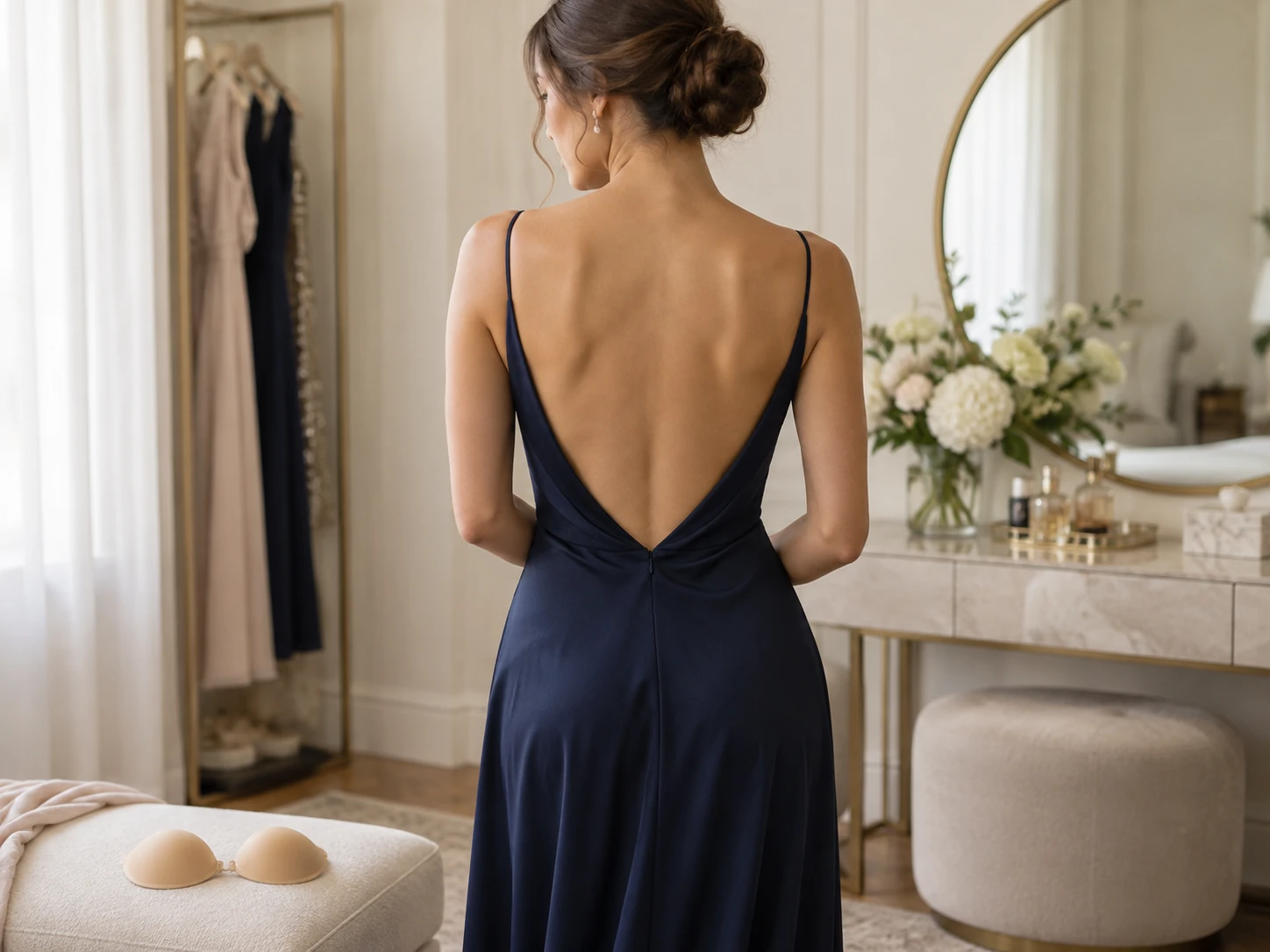
Check the dress opening before choosing a bra
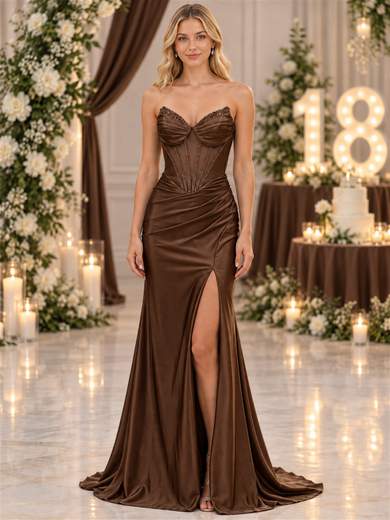
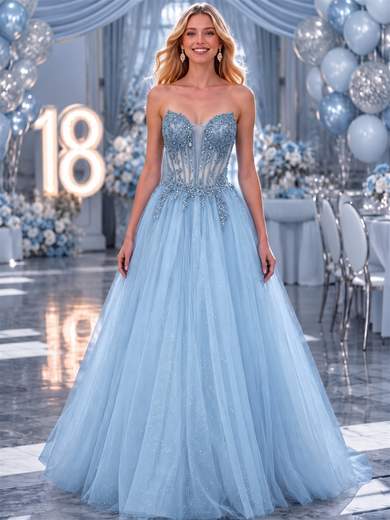
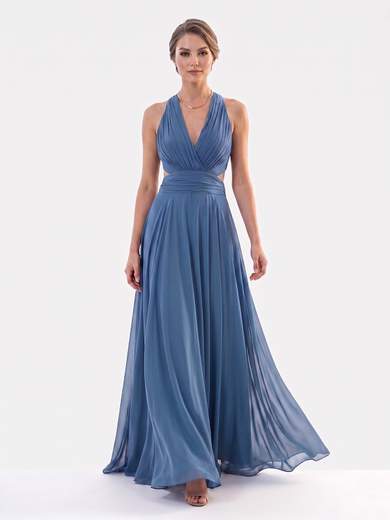
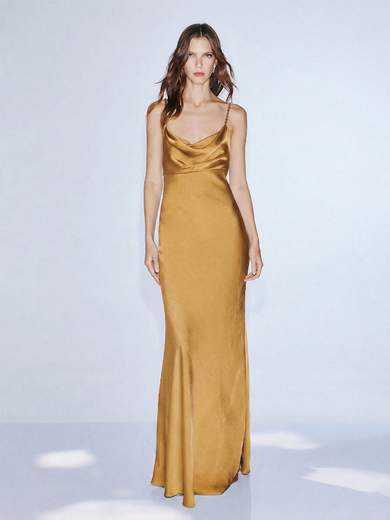
Look at the dress from behind and from the side, preferably while wearing it. Knowing that it is backless is not enough: a V-shaped back, a rounded opening and a lace-up design can reveal different areas. Identify the lowest edge, the width of the opening at bra-band level and how much fabric sits beneath the arms.
If your usual bra stays completely hidden, start there. If only part of the band shows, a low-back design may be worth trying. When the opening extends below even a lowered band, trying to move it further down may not solve the problem. The same principle applies to the cups: their sides must remain covered too.
Look for these differences when comparing dresses with open-back designs, rather than judging compatibility from a front photograph alone. If the back is not clearly shown, ask for another view or a description of the opening before choosing your underwear.
Low-back bras and converters: when to consider them
A lowered band is an option when the dress provides enough fabric to conceal it. It does not make every bra compatible with every back opening. A bra designed with a low back and a converter attached to an existing bra are also different solutions, each needing its own fitting.
A converter attaches to the fastening as directed by its manufacturer and changes the route of the band. Before choosing one, check the attachments, adjustments and final position. Being able to connect it does not prove that the bra will fit in the same way. Make sure the cups remain correctly positioned and that the new band placement does not become visible at the front or sides.
For example, a moderately low back paired with a covered front may make a lowered band a sensible candidate. With a wide side opening, however, the side panels could still show even when the back fastening is hidden. Assess the full outline of the underwear, not just the hooks.
A strapless bra solves a different problem: it removes shoulder straps but may still have a high band across the back. Clear components need checking on the body too, since reflections and edges can make them visible. Do not assume that transparent means invisible.
Adhesive bras, nipple covers and breast tape serve different purposes
If a back band would remain exposed, an adhesive bra may be worth considering, provided its shape, size and instructions suit both you and the dress. The advantage to check is the absence of a band across the back; actual support needs to be assessed for the specific product during your fitting.
Before buying, look at where the cups end, whether there are side wings and how high any centre fastening sits. An adhesive bra that works at the back could show through a plunging front neckline. Follow the manufacturer's size guide rather than assuming that your usual bra size transfers directly.
- Adhesive bra: an option to assess for coverage and shaping when the back needs to stay clear, with support checked separately.
- Simple nipple covers: mainly provide localised coverage; they do not replace the support of a bra.
- Breast tape: needs an application compatible with the exposed areas of the dress and the specific product instructions.
For adhesive products, follow the manufacturer's directions on skin preparation, preliminary testing, wear time and removal. Do not improvise with glues or tapes intended for other purposes. If you prefer not to use adhesives, make that a starting requirement: it is better to assess another option than rely on an accessory you do not want to wear.
The decision is about more than a neat appearance in the mirror. If you need a particular level of support to feel comfortable, do not replace it with coverage alone simply because the back looks clearer. Choosing a different dress opening may be more useful, while preserving the secure feeling you want.
Low-back bodysuits and cups built into the dress
A bodysuit may work if its back edge sits below the edge of the dress. The term “low back” does not describe a universal depth: compare the actual outline, including straps, sides and front. A bodysuit that shapes the torso does not necessarily provide the bust support you need.
Try it while seated as well. Check that the torso length allows comfortable movement, that the fastening is manageable and that the back edge does not ride into the exposed area. These checks establish compatibility with the opening before you consider how smooth it looks under the fabric.
If the dress has built-in cups, ask what they are intended to do: they may help create shape without functioning as a complete bra. Assess the dress on your body before automatically adding another layer. Combining built-in cups with a bra can change the volume and position of the bodice.
If the cups would need altering, have a professional assess what is possible with that particular garment. Do not buy on the assumption that an unconfirmed alteration will work. If you need substantial support, the construction of the dress matters too; the focus here is finding underwear that works with that construction.
Trying underwear with your dress: five useful checks
Bring the underwear you intend to wear to your dress fitting. If you are comparing two options, try the same dress with both: this makes changes in coverage, bust position and comfort easier to see. Do not judge an accessory only by how it looks outside the dress.
- Check the back. Look at the band, hooks and edges in a mirror or photograph, both directly from behind and at a three-quarter angle.
- Check the front and sides. Make sure cups and adhesive wings do not appear through the neckline or side openings.
- Move naturally. Sit down, raise your arms and walk, watching whether the underwear becomes visible as the fabric changes position.
- Assess comfort. Notice whether you keep wanting to reposition the cups or band: staying in place for a few seconds is not enough.
- Check again before readjusting. After moving, see where the edges have settled before putting them back with your hands.
Think about the event itself too. Sitting for a long meal and dancing call for a more realistic fitting than standing still. No home fitting guarantees universal hold, but it can help you rule out combinations that already show clear limitations.
If no option meets both your visibility and comfort requirements, return to the occasion dresses with open backs and compare a shallower opening or greater side coverage. The aim is a combination you can enjoy wearing without checking your underwear every time you move.
Frequently asked questions about underwear for backless dresses
Can I wear the same bra with two different backless dresses?
Only after trying it with both. Two openings of the same depth can have different widths, while the front neckline may expose a different part of the cups. Check compatibility with each dress individually.
Should I buy the bra or the dress first?
If you have support requirements you cannot compromise on, start with underwear that works for you and compare compatible dress openings. Otherwise, choose a dress first, then assess the underwear before committing to the final combination.
Can ties across the back hide a bra band?
Do not rely on them without a fitting. A tie may cover the band from only one angle and move as you do. Check the back at a three-quarter angle and while seated, without deliberately arranging both pieces to overlap.
Will a skin-toned bra disappear against a bare back?
No. A shade close to your skin may be less noticeable, but it does not remove edges, hooks or differences in texture. To keep the opening clear, the band needs to remain beneath the dress fabric.
How can I assess underwear when buying the dress online?
Compare back and side photographs and ask about cups and fastenings if details are missing. Check the returns conditions and respect them when trying the combination; for adhesive products, check any hygiene-related restrictions before buying too.
Prodotti consigliati blog