
What to Wear Under a Women's Suit for a Wedding or Special Occasion
When deciding what to wear under a women's suit for a wedding or special occasion, start with the jacket opening. The layer underneath should sit neatly between the lapels without pulling across the bust or adding bulk at the waist. A soft blouse, simple top, fluid shirt or bodysuit can all work, provided you feel comfortable sitting down and taking off your blazer. Neckline, fabric and length make the difference. This guide explains how to compare the options, coordinate colours and check the fit before the event, so your chosen top complements the suit throughout the day.
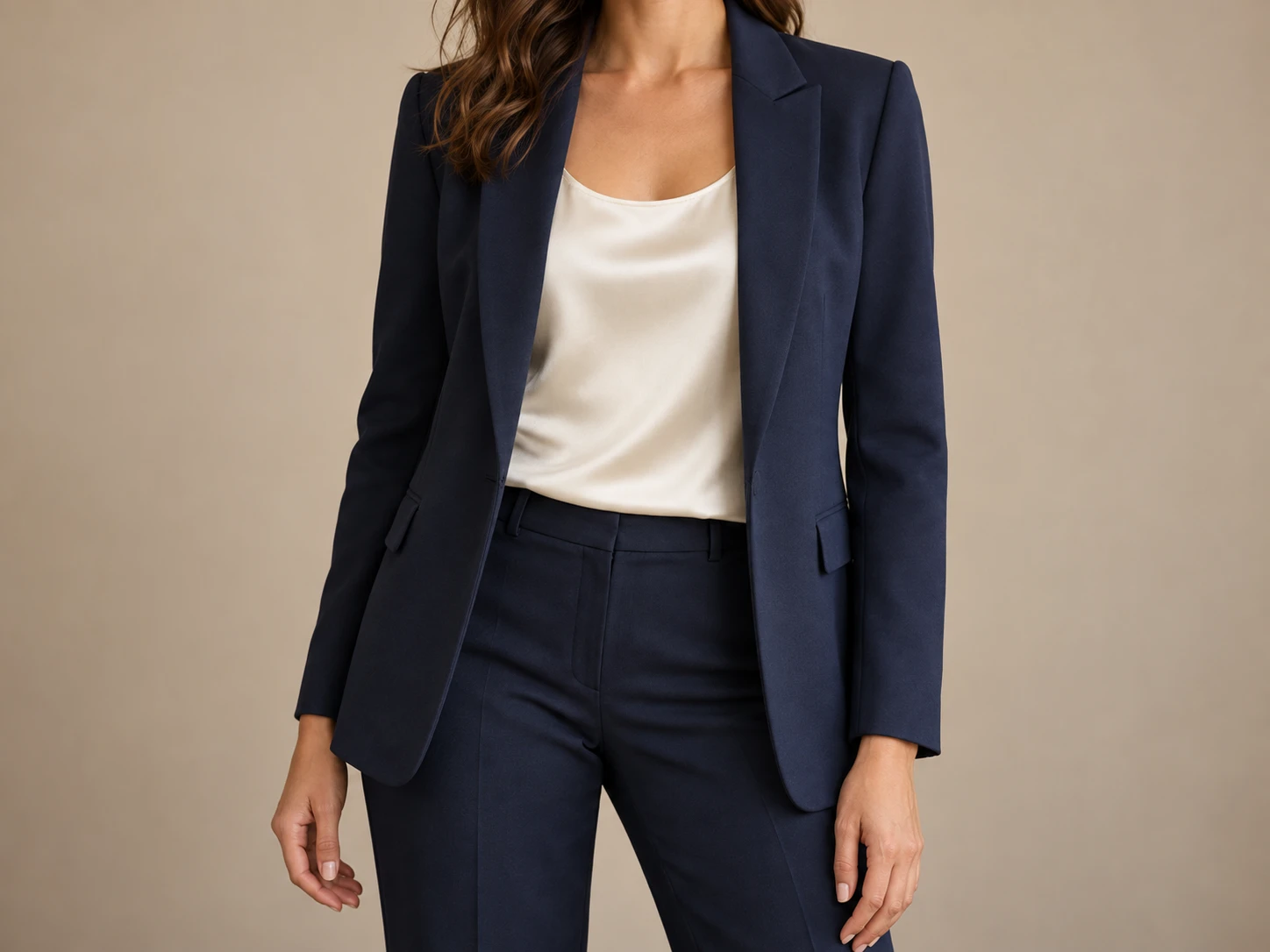
Choose your top around the suit jacket
Put on the jacket unbuttoned and look at the space between the lapels. A simple neckline gives a jacket with decorative buttons, embroidery or glossy trims room to stand out. With a more understated blazer, you could try a blouse with gentle gathering or a draped detail, making sure it remains visible and is not crushed when you fasten the jacket.
The relationship with your trousers or skirt matters too. A high waistband leaves less room for tucked fabric: a very long top can bunch underneath. If you prefer wearing your top untucked, check that the length looks deliberate rather than leaving an uneven strip beneath the blazer. Try all the pieces on together before deciding.
As you compare women's suits for special occasions, think about the top you would like to wear underneath. A jacket with closely fitted sleeves and a blouse with full sleeves may look lovely separately but feel awkward together. The right layer allows the blazer to hang naturally.
Top, blouse, shirt or bodysuit: which works best?
Your choice depends on the look you want and how the garment behaves under the jacket. No category is automatically more elegant than another: cut, finishing and fit matter more than the name on the label.
A simple top to keep the focus on the jacket
A sleeveless top with straps wide enough to cover your bra straps is an uncomplicated option. Choose a round, square or V neckline that stays in place. A gently skimming cut follows the body without pulling, while an oversized top can form folds at the sides. If you prefer narrow straps, try the top with the underwear you intend to wear to the event.
A soft blouse for a more fluid finish
A blouse adds movement and can help you feel dressed for the occasion without your jacket. Pay particular attention to the shoulders and sleeves: ruffles, heavily gathered seams and bulky cuffs can get in the way. A small draped detail at the front works best when the blazer leaves it enough space. Check that the blouse does not balloon above your waistband when you sit down.
A shirt for a more defined look
A shirt is a good choice if you like a neat silhouette. A discreet collar and fabric that moves with you soften the combination, while a more structured shirt creates a sharper effect. Make sure the buttons do not gape across the bust and the collar does not catch beneath the lapels. For a special occasion, careful finishing can be enough without adding bows or extra decoration.
A bodysuit to keep the waistline smooth
A bodysuit prevents the hem from slipping out of your skirt or trousers, but its torso length needs to suit you. If it pulls on your shoulders or rides up when you lift your arms, a tidy appearance is masking an uncomfortable fit. Try sitting down and check that the fastening is practical. A bodysuit does not have to be very tight or designed as shapewear to work under a jacket.
Check the neckline, underwear and sheer areas
Assess the neckline while moving, rather than only standing in front of a mirror. Lean forward slightly, reach out and sit down: the edge should stay where you want it without constant adjustment. A low neckline may be a deliberate choice, but consider the setting and how you will feel wearing the blazer open.
Try the top with the bra you will actually wear. Straps, seams and cup outlines can be more noticeable through fine fabric or beneath a shiny surface. A shade close to your skin tone may be less visible under a pale top than white, although the fabric makes a difference. Check the result in daylight and from the side as well as the front.
If you choose lace or sheer panels, decide how much coverage you want. A lining or an extra camisole can help, provided the additional layer does not feel restrictive. Look at the garment without your blazer too: you may take your jacket off during the reception, and your top should feel comfortable to wear on its own.
What colour top goes under a black, navy or pale suit?
You can create continuity or introduce contrast. A top close to the suit colour produces a unified look, while a different shade draws attention to the jacket opening. Always compare the garments in the same light. Two nearly matching colours can look harmonious, or they may appear to be an unsuccessful attempt at an exact match.
- Under a black suit: ivory, soft pink or champagne create a gentle contrast. Black on black works too: a change in surface, such as a matte jacket with a softly lustrous top, helps distinguish the layers.
- Under a navy suit: try pearl, blush or a delicate blue. For a tonal combination, compare the undertones of the actual fabrics rather than relying on their colour names.
- Under a pale suit: a top close to the jacket colour keeps the outfit soft. A stronger colour draws more attention to the upper body; choose it if that is the effect you want.
Choosing a top does not replace checking the whole outfit against the invitation. For a wedding, consider the overall impression, especially if both suit and top are very pale. There is no need to introduce contrast for its own sake: a simple combination can look considered when fit and finishing work together.
Fabric and season: avoid bulk and bunching
For a warm-weather occasion, notice how the top sits against your skin and how much room remains beneath the blazer. A lightweight garment may feel pleasant, but “satin” or “chiffon” alone does not tell you its fibre content or how comfortable it will be. Read the label and consider lining, fabric density and fit as well: a surface description cannot explain how a fabric will behave on its own.
In cooler weather, you could choose a sleeved top or fine knit if the level of formality allows it. Avoid squeezing a thick sleeve into a closely fitted jacket. If the venue will be heated, also try the outfit without the blazer. Adding layers you cannot easily remove may make the reception less comfortable.
Before the event, read the care instructions and prepare the garment accordingly. Check creases, edges and seams rather than guessing at an ironing temperature. If the fabric clings during your fitting, consider a different combination instead of assuming the problem will disappear once you arrive.
Try the complete outfit before the occasion
To choose between two tops, try each with the same suit under the same conditions. A photograph from the front may help, but you need to move to assess comfort. Take a few minutes to work through these checks:
- Fasten the jacket and check that the top is not pushing against the buttons.
- Sit down and make sure fabric is not gathering at the waist.
- Raise your arms to see whether the neckline and hem stay in place.
- Remove the blazer and check coverage, armholes and visible underwear.
- Look at the front and back in daylight rather than relying only on fitting-room lighting.
For example, a plain top beneath a jacket with prominent lapels lets the blazer's construction stand out. With a simple jacket, a blouse with restrained draping can add movement. These are starting points to try with your own suit, rather than fixed formulas. Between two otherwise similar options, choose the one that needs fewer adjustments.
If you are still putting the outfit together, compare elegant suits for weddings and celebrations with your top's neckline, sleeves and length in mind. A successful combination lets you sit, move and remove your jacket without having to keep thinking about what you are wearing.
Frequently asked questions about tops to wear under a suit
Can you wear a T-shirt under a suit for a special occasion?
It can work for a less formal event if it is well finished, unprinted and has a neckline that suits the blazer. For a dressier invitation, compare it with a top or blouse. Judge the complete outfit rather than the T-shirt alone.
Does the top need to be the same brand as the suit?
No. How the colours work together, the appearance of the fabrics and the fit of the layered garments matter more. A top from another brand can work well, provided you try it on with the suit.
Can you wear a waistcoat instead of a top?
Yes, if the waistcoat provides the coverage you want at the neckline and armholes. Try it without your jacket and while seated. If you need another garment beneath it, check that all three layers remain comfortable.
How can you stop a necklace catching on your top?
Check clasps and projecting details before wearing it with lace or delicate fabrics. See how the necklace moves against the garment: if it catches or rubs, choose a smoother piece of jewellery or leave the neckline clear.
Is it worth bringing a spare top?
It may be useful for a long event or a journey if you would like a ready alternative in case of a mishap. Choose one you have already tried with the suit and pack it with the fabric's needs in mind, so it is not badly creased when required.